
By Dan Bacher
Commercial salmon fishing on California’s ocean waters has been closed for the past three years, while only a very limited recreational salmon season has been allowed on the ocean and three Central Valley rivers this year, due to the collapse of the Sacramento River and Klamath River fall-run Chinook salmon populations. However, there is some welcome news regarding the Klamath River, where the removal of four dams was completed one year ago. I spent many hours fishing the Klamath River and its largest tributary, the Trinity River, for salmon and steelhead before the four Klamath dams were removed.
Last Friday, on Native American Day in California, Governor Gavin Newsom signed California AB 263.
This bill, introduced by Assemblymember Chris Rogers on behalf of the Karuk Tribe, Yurok Tribe and California Coastkeeper Alliance, extends emergency water regulations for two key Klamath River tributaries, the Scott and Shasta Rivers, until January 1, 2031, or until permanent rules are adopted by the State, to protect struggling salmon populations.
“The Shasta and Scott rivers are currently under emergency regulations that took tribal voices and our state’s fisheries into consideration when they were developed,” said Assemblymember Rogers in a statement after the bill first passed by the State Legislature. “Maintaining minimum flows on these tributaries will help the critical salmon restoration projects in the Klamath watershed continue to flourish. The temporary flow requirements maintained by AB 263 will provide certainty to farmers, fishermen, and tribal communities alike.”
Rogers went on to explain, “AB 263 was introduced in partnership with the Karuk Tribe, California Coastkeeper Alliance, and the Pacific Coast Federation of Fishermen’s Association. The bill would maintain river flows for at-risk salmon runs on two critical Klamath River tributaries – the Scott and Shasta Rivers.”
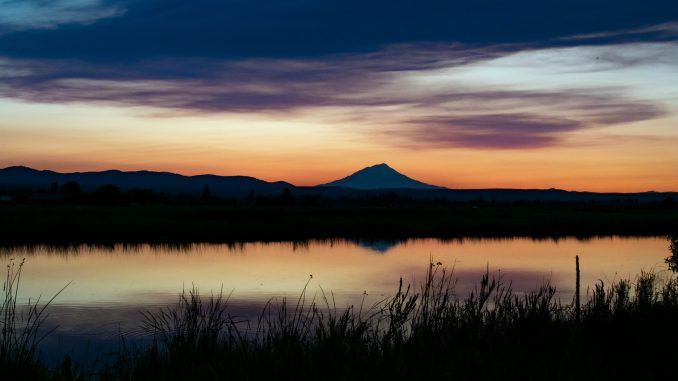
Rogers noted that most of the wild Chinook salmon found in the Klamath River are born in the Shasta River. The Shasta River features cold water flows that drain the Mount Shasta Glacier.
The Scott River is also a significant producer of Coho salmon. In fact, the majority of the wild Southern Oregon/Northern California Coho salmon, a state and federally endangered species), spend part of their lifecycle in the Scott River. So these two rivers are critical to restoring salmon in California.
Joseph James, the Chair of the Yurok Tribe, hailed the passage and signing of the bill in a statement.
“The passage of AB 263 is a critical step toward protecting the lifeblood of our people — the Klamath River and its salmon,” James said. “Tribes have fought to protect our water, fish, and culture, and this bill extends the safeguards we need while long-term flow rules are developed. This is real progress for the health of the river and everyone who depends on it.”
Karuk Chairman Russell ‘Buster’ Attebery agreed.
“Klamath dam removal was just the first step in rebuilding our salmon fisheries,” Attebery noted. “We must protect flows in key salmon nurseries like the Scott and Shasta Rivers.”
Fishing organizations also celebrated the passage and signing of AB 237.
“To improve conditions for fish, sufficient flows instream are necessary,” said Angelina Cook, Restoration Associate with the California Sportfishing Protection Alliance. “Yet lack of enforceable regulations render California’s rivers vulnerable to dewatering. AB 263 establishes measurable thresholds which empower agencies to limit excessive water withdrawals. Passage of AB 263 is a significant step to reverse trends toward extinction of a keystone species in the third most productive salmon-bearing river in the contiguous western United States.”
On the same day, Newsom signed AB 977 by Assemblymember James C. Ramos (D-San Bernardino), a bill that directs California State University to work with tribes towards establishing three tribal burial sites on CSU-owned land for the burial of Native American human remains. Ramos has described the new law as addressing “a critical need in the state’s repatriation efforts.”
The Governor also signed AB 1369 by Assemblymember Ramos that clarifies students’ rights to wear traditional tribal regalia at high school graduations.
“Native American Day is a celebration of Native culture and achievements, an acknowledgment of what Native peoples have endured, and a day to honor their resilience and all that they’ve protected,” Newsom observed. “Today’s legislation reaffirms our work to address historic wrongs and furthers the state’s promise to tribes of inclusion and accountability.”
However, Newsom continues to be in a fierce environmental battle with other California tribes over his proposed Delta Tunnel, the Sites Reservoir projects and Big Ag-backed voluntary agreements over water exports. These initiatives back by Newsom and some of the governor’s mega-donors that are strongly opposed by the Winnemem Wintu Tribe, Shingle Springs Band of Miwok Indians, Buena Vista Band of Me-wuks and other tribal organizations.
Thanks for covering this complex topic. But “drains the Mount Shasta Glacier?” First, there’s no such place. Shasta has several glaciers, but there is no Mount Shasta Glacier. Mount Shasta hosts five glaciers: Bolam, Hotlum, Konwakiton, Whitney, and Wintun glaciers (https://www.usgs.gov/volcanoes/mount-shasta/science/geology-and-history-mount-shasta ). The waters of the springs feeding the Shasta River have diffuse sources, including rain, snow melt and yes, a fair bit of glacial melt. But the hydrology is a lot more complex than implied here.
It’s worth studying these technical aspects as part of any ongoing reporting of legal tussles happening in the Shasta and Scott watersheds.
Thanks again to you and the News and Review. Keep up the good work!