

Trump calls California’s primary election “rigged” while Republican Gallagher wins special election in District One
By Ken Magri
California’s primary congressional races, while not yet officially certified, are mostly settled regarding which candidates will be running in the November 3rd general election.
There have been some interesting twists and turns in four of the North State’s district races. Congressional rules state that candidates do not have to live in the district they run in. So, the passing of Proposition 50 last fall sent various candidates jumping from one redrawn district to another in a kind of congressional musical chairs.
This year’s primary was made more interesting by a special election, newly drawn district maps, a Republican-turned-Independent jumping to a new district and two long-time Democrat incumbents running harder than ever.
During California’s slow and methodical count of ballots, President Trump has repeatedly claimed that the state’s elections are “rigged” so Republicans can’t win. Sunday (June 7) he walked off the set of Meet the Press while host Kristen Welker challenged his accusations as being without evidence.
Meanwhile, the ballot counting in California continues. News & Review decided to take a closer look at four area congressional races to see how they might play out in the general election. We also asked if candidates think this primary election was conducted in a fair manner.
Disclaimer: The percentages and vote amounts reported in this article reflect numbers offered by the California Secretary of State’s website as of Friday morning, June 12th. These numbers are certain to change, however. For accurate and updated election information, the Secretary of State website is the best direct source.
District One
In District One, which includes Butte County and much of the North Central Valley, there were two congressional races; a short-term special election and the regular two-year term primary.
Republican Assemblyman James Gallagher won the special election to fill the remaining months of the late Doug LaMalfa’s congressional term. Using district maps from 2024 for this special election, Gallagher was declared winner with 62.1% of the vote, already eliminating the need for an August runoff election.
Gallagher’s term lasts until January 2027, unless he is re-elected in November.
Among his main challengers, CSU, Chico professor, Democrat Audrey Denney is currently at 18.5% and Democrat State Senator Mike McGuire has 17.2% of the vote.
“When I am sworn in to Congress, it will be the first time ever I have been in the majority,” said Gallagher in his farewell comments in Sacramento after resigning from the California State Assembly. “I’ve spent my entire political career in the minority. It’s sharpened my skills, it’s refined my acumen, it’s made me stronger.”
But in the regular election for District One’s next two-year term, Gallagher’s lead is much smaller. This race is using the new Proposition 50 voter-approved district map intended to favor Democrats by adding parts of Sonoma and Mendocino counties.
Once again, Democrats split their vote mostly between McGuire and Denney, giving the primary lead to the Republican. Gallagher is at 43.8% and McGuire is at 40.5%, making them the two finalists for November.
Denney’s strength over McGuire in Butte County was not enough to overtake his more solid support from Mendocino and Sonoma counties. She is currently at 13.9%, and the remaining candidates combined are under 2%.
McGuire told News & Review, “The overall Democratic vote means that Gallagher is in deep trouble. The hard-working folks who call the North State home are tired of the chaos, corruption and cruelty of the Trump Administration. They’re ready for representation that actually delivers.”
The Democratic Action Club of Chico, which endorsed Denney, issued a statement last Monday asking Democrats to support McGuire in the general election. “The single priority we must all share is winning control of Congress and beginning to rein in the lawlessness of the Trump Administration,” read the statement.
If Denney supporters redirect their votes to McGuire, it should win District One for the Democrats for the first time since 2010, making Gallagher’s congressional term very short.
Regarding the fairness of the election, McGuire said, “Let’s talk facts and set aside the BS MAGA talking points. California runs some of the safest, most transparent elections in the country.”
District Four
Congressional District Four now reaches from Petaluma on the west side over to Lincoln on the east, and from American Canyon on the south end to Yuba City up north. This district was also significantly redrawn by Proposition 50.
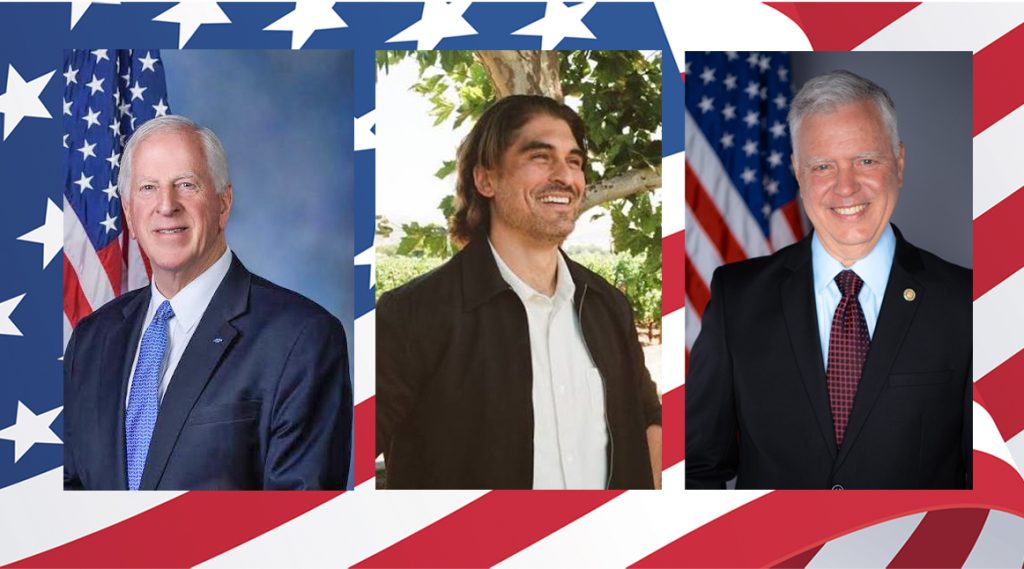
Incumbent Mike Thompson from St. Helena, now serving in his 14th term, leads the race with 39.5% of the vote. Fellow Democrat Eric Jones from Napa and Republican businessman Raymond Riehle from Citrus Heights are in a close race for second place. Currently, Riehle is at 22.3%, about 1,700 votes ahead of Jones at 21.3%.
Thompson said in a statement, “I am so thankful to the over 240 local elected officials and community leaders that supported my campaign, every volunteer who put up a sign, collected petition signatures, knocked on doors, and talked to our neighbors. Ours was a true grassroots effort.”
Jones, a 35-year-old venture capitalist, is confident he will take second place from Riehle, setting up an all-Democrat general election race. “We see the numbers coming our way,” said Brian Parvizshahi, who manages the Jones campaign. He reasoned that outstanding ballots from Sonoma, Napa and Yolo Counties, including Davis, should break for Jones.
Jones told News & Review, “This primary sent a clear message. A majority of voters are ready for change,” he said. “These voters understand that our government, whether in Sacramento or Washington DC, no longer serves everyday Americans and their families…The continued energy in the streets, at doorsteps, and in living rooms is what will carry this movement to victory in November.”
“I’m not certain I will be in the general election,” admitted Riehle, who nevertheless feels he “far exceeded” expectations as a Republican with little funding in a district that leans heavily Democrat. District Six was where Riehle wanted to run, as he lives in that district. But Kevin Kiley, a Republican who switched to Independent, moved over to District Six for this election.
“I was not going to run against a sitting Republican,” said Riehle, referring to Kiley’s political leanings and Republican party affiliation.
News & Review asked both Jones and Riehle if they felt the election was fairly conducted. Jones’ campaign manager Parvizshahi answered, “He does, yes!”
Riehle was more reflective, saying President Trump should back-up his election fraud claims with real evidence. “Within the limits of what I understand…I am confident that the registrar of voters only counted the ballots that came in legally,” said Riehle.
District Six
Congressional District Six now stretches east from the Sacramento International Airport over to Citrus Heights and south towards Rancho Murieta. Currently represented by Ami Bera, he is moving over to the newly redrawn District Three.
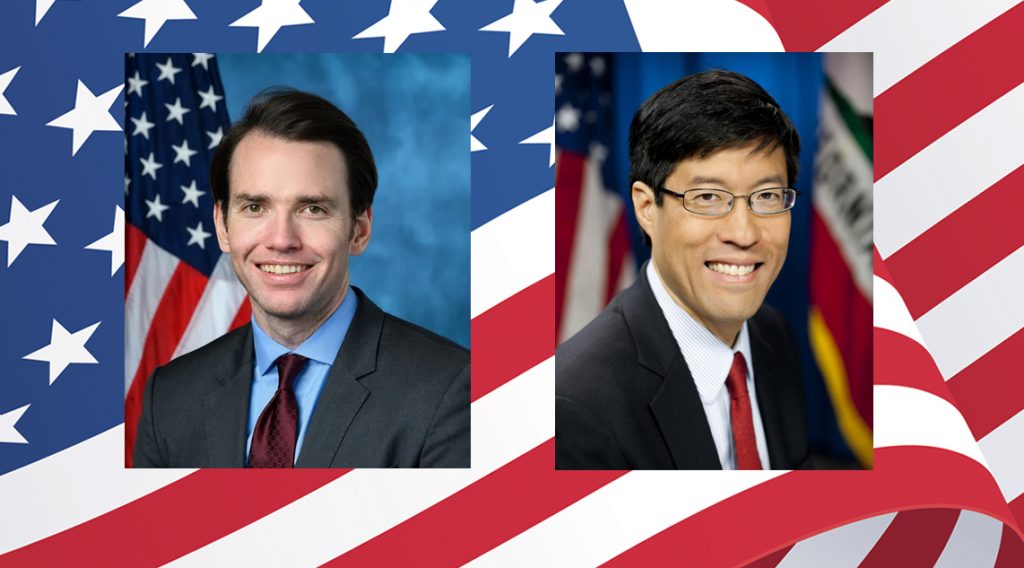
US Representative Kevin Kiley, an Independent, leads Democrat State Senator Richard Pan by a margin of 24.5% to 23.2%. Republican candidate Michael Stansfield has 20.1%. Remaining Democrat candidates made up 32.1% of the remaining ballots.
Kiley switched from the Republican party to Independent and jumped over to District Six after Proposition 50 created a District Three map in which he couldn’t win. Kiley’s current district encompasses most the eastern Sierra Nevada, whereas the new district map stays north and closer to Sacramento.
“This race will be a choice between the extreme partisan politics that have made California the most unaffordable state in the country, and the independent leadership that allows our local communities to thrive,” said Kiley in an official campaign statement. He also made a speech in the House of Representatives earlier this week admonishing California’s election process for its “glacier” pace in counting ballots.
Kiley and Pan are both expected to be in the general election. If remaining Democrat voters go for Pan, he can defeat Kiley even if Kiley gets Stansfield’s Republican votes. A Pan win would keep District 6 in the Democrat column.
District Seven
District Seven includes most of the City of Sacramento with small parts of southern El Dorado County and northern San Joaquin County.
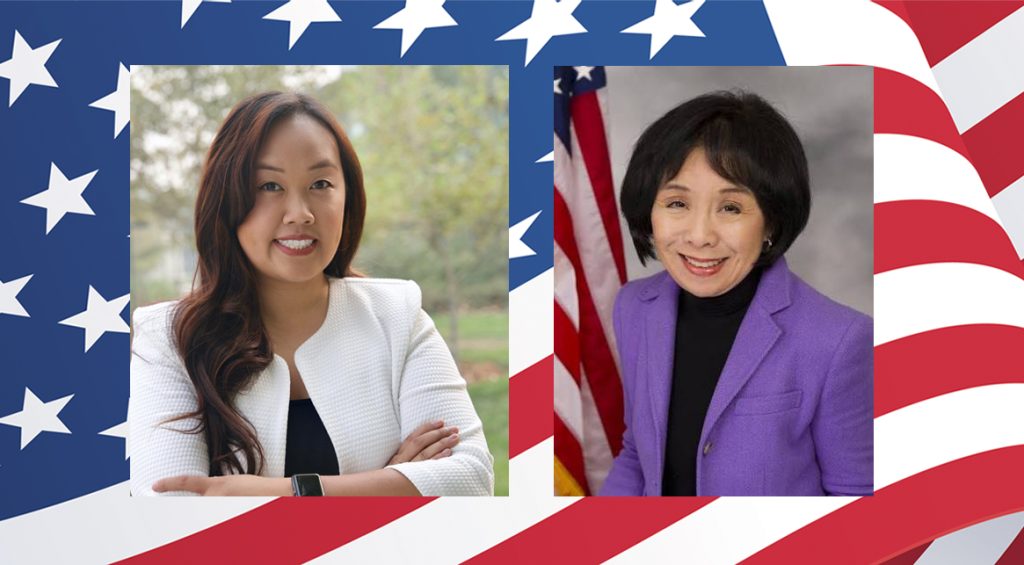
Currently, Sacramento City Councilmember Mai Vang leads with 30.8% of the vote. Incumbent Doris Matsui is in second place with 29.1%. The general election in November will feature these two Democrats.
Republican candidates Zachariah Wooden and Ralph Nwobi have 22.1% and 15.3% respectively. They are not expected to make it to the general election.
Matsui, 81, has been in Congress since 2005, when she won a special election to replace her husband, the late Robert Matsui. She is not used to strong opposition and her second-place finish in this primary is considered an upset. The Associated Press wrongly called the race for Matsui on election night. Since then, newly counted ballots have Vang in the lead.
Vang has proven to be a serious challenger. Like Eric Jones in District Four, she is part of a new wave of younger Democrat candidates seeking generational change for their party and challenging older incumbents for being out of touch with voters.
“People are tired of leaders who answer to their biggest donors instead of the families they represent,” said Vang in a public statement about the race. “The squeeze on working families doesn’t check your party registration — and neither will I.”
Matsui told News & Review, “I got into public service to find every avenue to make real, tangible progress for the people I serve. That’s why I’ve spent years fighting and delivering for families in our region.”
Seeking a possible 12th term, Matsui said she recognizes she will “have to battle going into November,” but wants another shot at “holding the Administration accountable for their abuses.”
Regarding the fairness of the election, Matsui said, I do believe the primary election was fairly conducted and the only reason there is any question is because of the disingenuous politics being played by the president and his cronies.”
Explaining California’s ballot-counting process
Despite the president’s claims of “rigged” elections, California’s process for counting ballots is slow because it is thorough and methodical. State law emphasizes accuracy over speed, so signatures on all mail-in ballots are rigorously checked for authenticity.
With 26 million registered voters, enough time must also be given for late-arriving mailed ballots (as long as they are postmarked by election day) and ballots officially approved for correction by voters who made a small mistake.
In Utah as well as Alaska, one of the country’s least populated states, election officials also take a long time to count ballots due to the same kind of careful verification process.
According to California Secretary of State Shirley Weber, and California’s Attorney General Rob Bonta, there has been no credible evidence of election fraud during the June 2, 2026 primary election.

Be the first to comment