
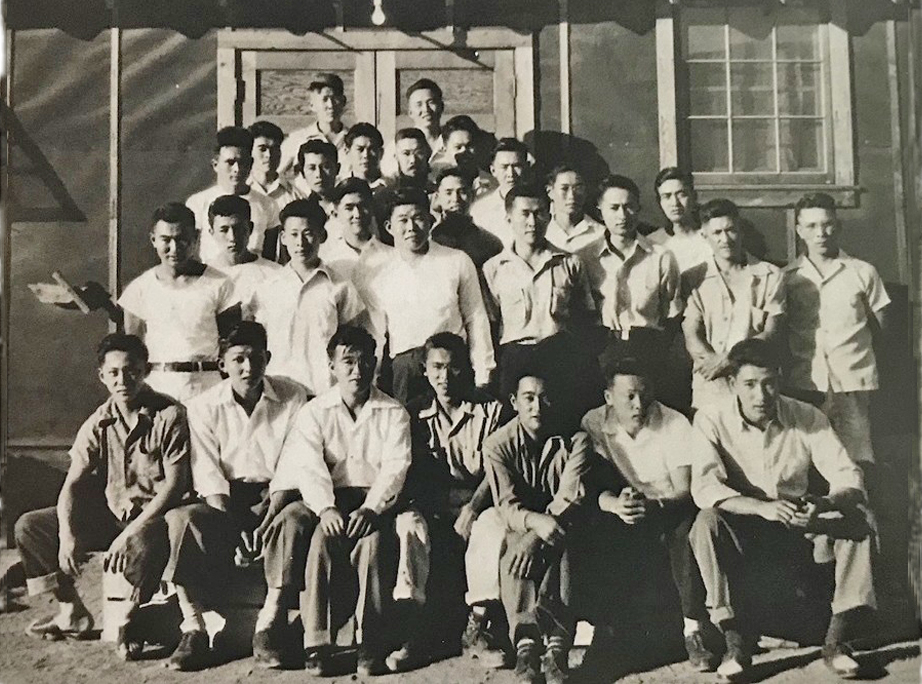
102-year-old Gridley man speaks in Chico on the internment of Japanese Americans in World War II
By Ken Magri
“My grandfather is a rock star!”
That’s Jamie Gilmore-Wilson in a documentary film, referring to Jim Tanimoto of Gridley, a proud Japanese American, and at 102-years old, one of the remaining survivors of the Tule Lake War Relocation Center.
Sponsored by Chico History Museum, Tanimoto will speak on Saturday, May 23rd at 10:00 am at Westport Event Center in downtown Chico about how he and his family spent most of World War II locked inside what he calls “a concentration camp”. The 35-minute documentary film about his experiences at Tule Lake, “Mr. Tanimoto’s Journey,” will be shown before his talk.
On February 19, 1942, President Franklin Roosevelt signed Executive Order 9066 which allowed the forced evacuation of all Japanese whether they were citizens or not. The US Army used that order to quickly build 10 relocation camps across the nation. Japanese families were given a few days to pack up and leave their homes, farms and businesses.
“We were accepted as Americans before the war,” said Tanimoto. But on December 8, 1941, the day after the Japanese bombed Pearl Harbor, Tanimoto said “We went into town and there was something different that wasn’t there December 6th.”
Nationwide, the executive order affected more than 110,000 persons of Japanese descent. But two-thirds of them were American citizens and 90,000 lived in California at the time, according to the National Park Service.
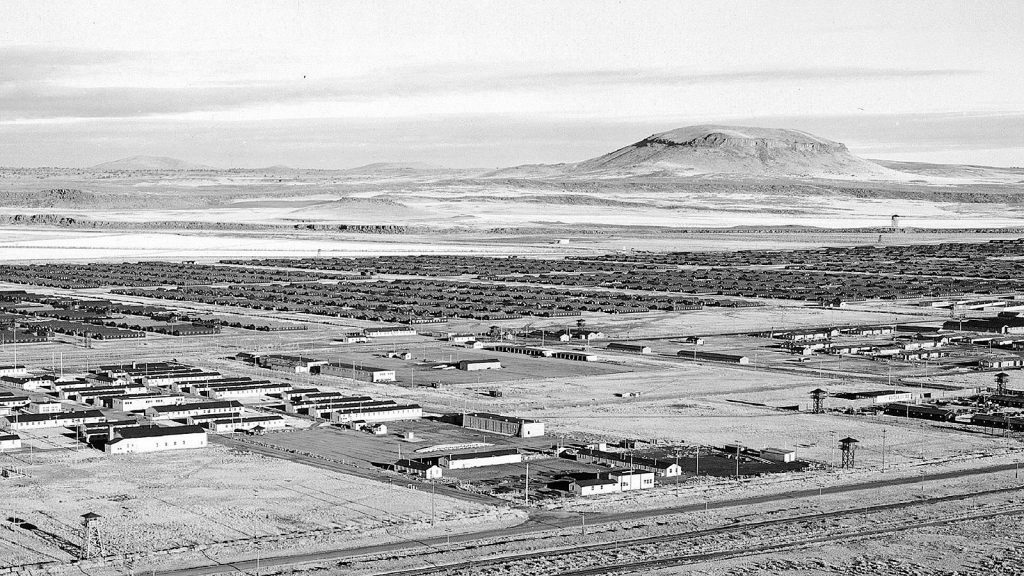
At Tule Lake almost 30,000 Japanese were interned throughout the duration of the war. At its peak, the population was 18,789. Tule Lake became California’s second largest city north of Sacramento.
Located in Modoc County, just south of the Oregon Border, the internment camp was built on 7,400 acres of land, including 3,500 acres of irrigated farmland. It contained 1,700 structures. It had a post office, mess halls, a high school, small factories and communal buildings.
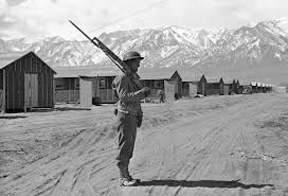
But interns were reminded of their imprisonment every day by multiple security fences, 28 guard towers, a stockade for jailing people and an unforgiving location.
The lake at Tule Lake is mostly a dry basin, also called an “intermittent lake,” meaning that it only exists during years of heavy precipitation. Tanimoto described the area’s landscape as “sagebrush, sand and open ground; there were very few trees.” The camp’s surrounding terrain was too barren, the winters too desolate and the summers too dry and hot to aid any escape.
In 1943, things got more complicated for Tanimoto. “They passed out the so-called loyalty form,” he said. Tanimoto and 35 other interns refused when required to answer “questions 27 and 28.” Those questions respectively asked whether the men would join the armed forces, and if they would denounce any allegiance or relationship with the Japanese Empire.
The men refused on principle because they were already US citizens and had no allegiance to Japan in the first place. “We were not saying we were disloyal,” said Tanimoto. “We were protesting to the government that you cannot do this to an American citizen.”
For refusing to sign or answering either question “no”, the men of Block 42, later referred to by Americans as the “no-no boys,” were put in the Alturas County Jail before being transferred to an abandoned California Conservation Corps encampment.
Late one night the men were rousted from their new barracks and lined up outside. Facing US Army soldiers and a machine gun, Tanimoto wondered if he was going to be shot. But it was a scare tactic created by the soldier in charge, who warned the men about trying to escape before sending them back to bed.
In August of 1945 the war ended and interns who were US Citizens gradually left Tule Lake, returning to what was left of their original lives. Others were deported to Japan and some who had renounced their citizenship were transferred to a Department of Justice internment camp in Crystal City, Texas.
The Tanimoto family finally returned to Gridley. But anti-Japanese feelings persisted. Jim said that when he saw his former high school teacher, the man refused to shake his hand.
In 1988, President Reagan signed the Civil Liberties Act which offered a formal apology for the internment of Japanese, and $20,000 in compensation to over 100,000 surviving Japanese Americans. The late Sacramento congressman Robert Matsui, who was also interned as a toddler, worked tirelessly to pass the act through the House of Representatives.
“The driving forces behind the ‘relocation’ and incarceration of the Japanese was not military necessity but rather ignorance, fear, and racism,” said Chico State history professor Michael Magliari, who appears in the documentary. “The Japanese ‘internment’ during World War II offers several very important lessons for Americans in general and for our policymakers in particular.”
Magliari told News & Review one lesson is that good public policy must always be based on calm, reason, and good data. “Another valuable and very timely lesson provided by the Japanese American incarceration story is its powerful reminder of how fragile and vulnerable the civil rights of US citizens remain during times of war or other grave external threats to national security.”
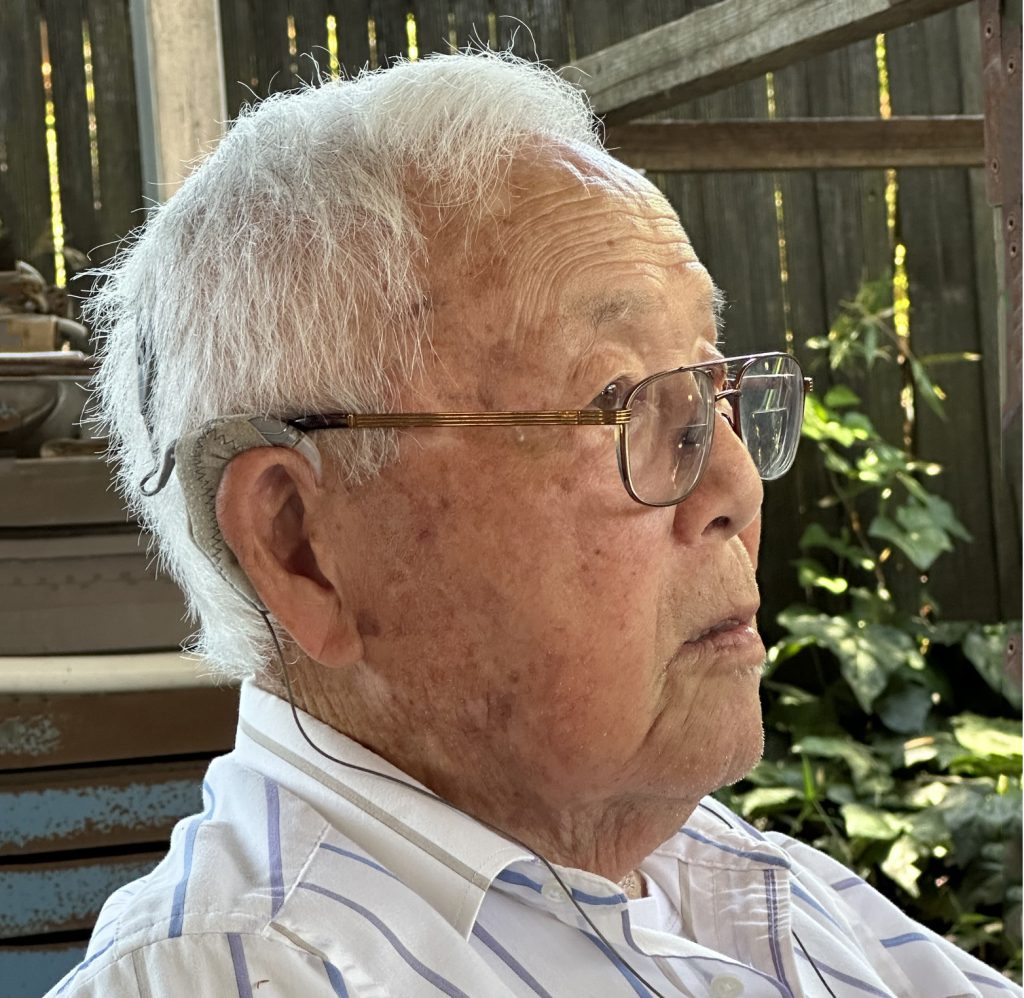
“Jim Tanimoto’s personal story offers a valuable and poignant reminder of the importance of learning and remembering the very tough lessons taught by history,” added Magliari.
Roots author Alex Haley popularized the saying that “every time an old person dies, it’s like a library burning down.” Jim Tanimoto is one of those libraries whose stories and observations of life during World War II are priceless.
In a nation proud to be celebrating its 250th birthday, Americans should embrace our regrets as well as our accomplishments. That Tanimoto and other Japanese American citizens showed the ability to forgive and thrive after the war, despite their treatment, is an American achievement we can all embrace.
More information and tickets for this event available at Chico History Museum.
Event will be held on May 23 at Westport Event Venue, 603 Broadway, Chico.


Be the first to comment