
By Sam DeLong
Full disclosure: The author of this story was an employee of Little Red Hen for more than 10 years before deciding to pursue a career in journalism.
If you’ve lived in Chico long enough—or even just passed through—you’ve probably wandered into a Little Red Hen store. Maybe you’ve browsed vintage furniture, quirky gifts or fresh flowers. What you might not have noticed is that behind the curated shelves and charming displays is something remarkable: a workforce made up largely of people with disabilities.
Little Red Hen markets itself as “Retail with a Purpose.” Unlike many employers nationwide that legally pay people with disabilities sub-minimum wages—sometimes as low as $3.50 an hour—the Chico nonprofit pays standard minimum wage. In 2024, an estimated 38,000 people in California alone were still earning those deeply reduced wages, but Little Red Hen has positioned itself as an alternative model. And even though that sub-minimum wage practice was banned in California and a few other states by the end of 2025, it is still in effect, federally.

LRH’s community-centered mission has helped build a strong advocacy voice in Chico. Customers are often willing to pay a little more, knowing profits support both a local business and programs serving people with disabilities.
The organization began in the early 1990s, when Executive Director Theresa Wolk-Hayes struggled to find services for her son, Alex, who is on the autism spectrum. What started as a personal search for support grew into one of Chico’s most recognizable nonprofits. Senior Director Erika Birkholm now oversees the operations. By fiscal year 2024, Little Red Hen was generating nearly $4 million in revenue, according to records from ProPublica.
Little Red Hen has long operated as a learn-by-doing nonprofit, but balancing mission and business has always depended in part on state funding. In 2025, that funding began to unravel.
California budget cuts hit the Department of Developmental Services, which sets funding levels for disability programs. Reductions affected clients statewide and rippled through organizations funded by Far Northern Regional Center, including Little Red Hen. Other services used by people with disabilities were also squeezed: In-Home Supportive Services (IHSS) introduced an asset limit, and Medi-Cal increased monthly premiums. For people already living on fixed incomes, the message was blunt—do more with less. State figures show a $221 million reduction in provider determination services (i.e. supportive employment) and a $22 million cut to determination programs that help people with disabilities choose career paths. For nonprofits built around those funds, the impact was immediate.
At Little Red Hen, many longtime employees suddenly found themselves out of work, often with little notice. As late as summer 2025 LRH’s Facebook page claimed it employed at least 175 people across all its retail locations. Exact figures are difficult to confirm, but that number may have been outdated. A private Facebook group made up of approximately 100 developmentally disabled former LRH employees alleges that a large number of these workers received reduced hours or were laid off at some point during their employment.
Now in February 2026, the nonprofit’s website states it employs 125 developmentally disabled adults.
Tre Keys, information officer at Far Northern Regional Center, explains the impact of rate reform on available funding: “Providers were given the opportunity to receive competitive rates. To receive them, providers such as Little Red Hen had to meet new regulatory requirements, changing the delivery of their services to support individuals. Some may have lost their jobs but were provided other opportunities for employment, internships, or activities.”
Despite the upheaval, the mission of Little Red Hen remains unchanged. “The path ahead is rooted in growth, creativity and connection,” Senior Director Erika Birkholm said. “We are committed to building programs and employment opportunities that help individuals with disabilities reach their fullest potential.”
The nonprofit operates five retail locations in Chico, four of them downtown, and its Kitchen Store on East Avenue. Locations include an outdoor plant nursery, kitchen store, home furnishings shop, vintage and antiques store, and a floral shop. Online shopping is also available for some of the merchandise.

Little Red Hen Floral moved downtown from its East Ave. location at the beginning of 2024, and Manager Angela Haskell credits much of Little Red Hen Floral & More’s recent growth to the new location.
“Since moving downtown, we see a lot more people coming in,” Haskell explains. “We plan lots of fun community activities, floral design classes, custom weddings, and local and online flower delivery. Valentine’s Day is coming up, and that’s always a crazy time for us.”
The stores also function as training grounds. Employees learn customer service, retail operations, and workplace skills while helping fund programs serving both children and adults. Retail locations teach customer service and cashier skills, while the floral shop and plant nursery focus on floral and horticultural design. The East Avenue Kitchen Store also offers cooking classes and healthy eating support.
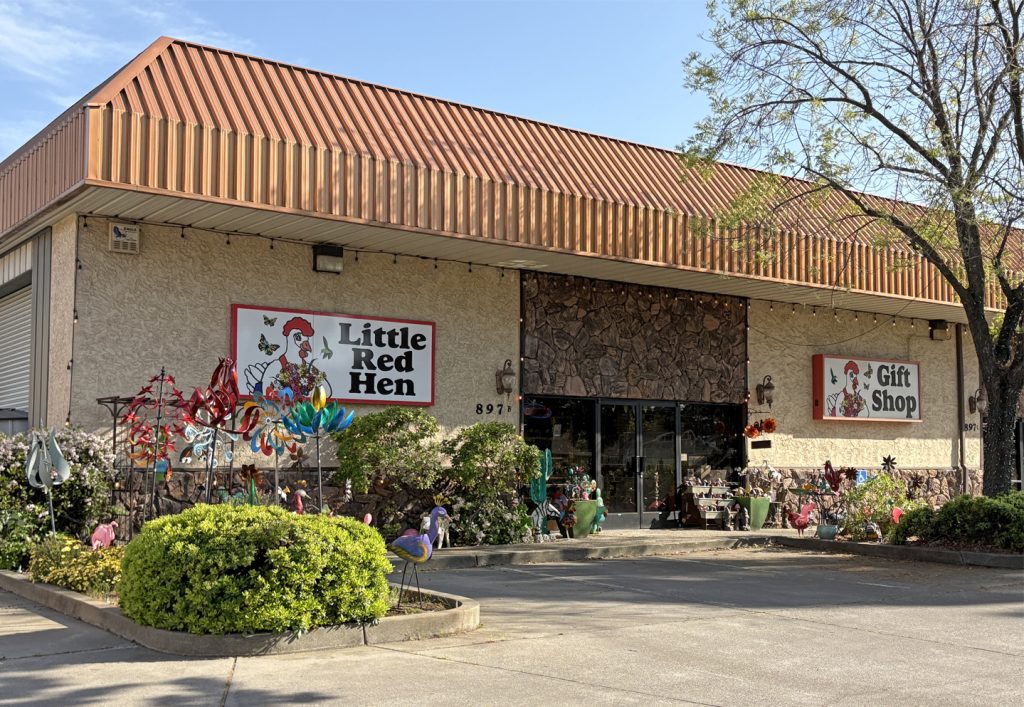
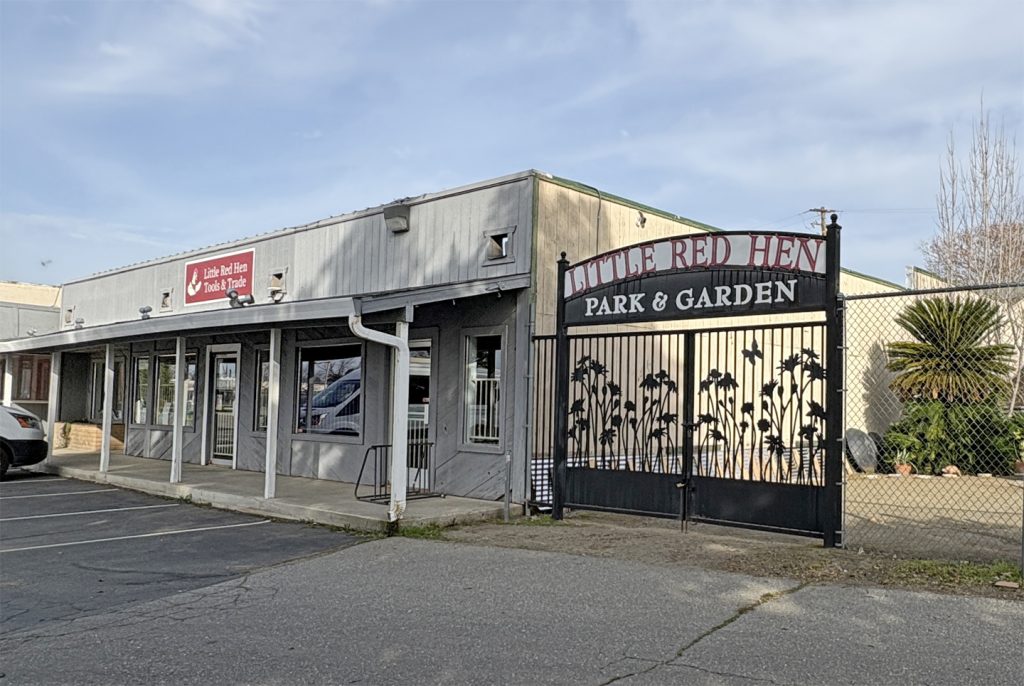
Retail revenue helps fund the many LRH community day programs as well, some located in other buildings in Chico. From children’s programs like Lil Sprouts to the community theater program Not Your Garden Variety Theater, these initiatives are a visible part of Little Red Hen, often appearing at local fundraisers such as Chico Walks for Autism. The Gift Shop on East 20th Street closed earlier in 2025 and has since been replaced by The Lab, a day program teaching video game design, video production, and other technology skills. Little Red Hen Tools and Trade—another training facility—offers welding and automotive training.
Director of Adult Day Services Gabrielle Green says LRH continues adapting in response to funding changes. Products from closed locations, including the former Gift Shop, have been redistributed to other stores. Supporters can still help by shopping at Little Red Hen locations, volunteering, or donating. As the organization moves into 2026, Little Red Hen hopes its next chapter will again balance purpose and sustainability.
More information about their programs, retail stores and locations can be found at their website.

Great story! I signed up for the email list and will make a point of shopping more often at LRH stores.
I wasn’t aware of the new downtown shops. I’ll try and visit soon. But I see the same problem for them as others. Too much local money goes to rents to out of town owners instead of supporting local businesses and services.
Might be time for the City Council to follow Santa Barbara’s city council in establishing rent control so that our money stays in town.