
By Emily Haerter
On September 4, Louise Whitrock-Wyatt and David Allen Petterson appeared in Butte County Superior Court on charges related to child endangerment and animal abuse. This new investigation into their household caused 32 cats and three dogs to be rescued into the City of Chico Animal Shelter.
Two weeks after their arraignment, Whitrock-Wyatt and Petterson pleaded no contest. But it wasn’t the first time they were convicted of animal abuse. The pair was charged with the same offense back in July of 2023. In this latest case, the couple’s house on Chico’s Glacier Peak Lane was reported to be in a deplorable condition, riddled with numerous dirty crates and malnourished animals. That meant it was barely inhabitable for Whitrock-Wyatt and Petterson’s two, non-verbal special-needs children.
In the earlier 2023 case, which involved 47 animals being removed from Whitrock-Wyatt and Petterson’s home, the couple was sentenced to probation and were not allowed to own animals for 10 years. However, on May 1, 2025, a judge allowed them to own animals again after the completion of an animal abuse course, according to the Butte County District Attorney’s Office.
Now, authorities were dealing with the couple all over again — and so was Chico’s animal shelter.
Animal advocates are concerned that relaxed policies surrounding mental health intervention with animal hoarding make it easier for perpetrators to reoffend without the proper resources of extensive therapy or treatment.
For pet lovers, a position written by the American Society for the Prevention of Cruelty to Animals in 2017 still stands relevant in 2025, stating, “Most existing registries are limited to a specific city or county, thus they will have no effect on monitoring individuals who leave the jurisdiction covered by the registry.”
The group added, “Participation in the existing animal abuse registries has been extremely low.”
Some data suggests that animal hoarders show an extremely high recidivism rate. Situations like Whitrock-Wyatt and Petterson’s 2023 case, and what followed after, are proof for advocates that the justice system hasn’t perfected a way to handle animal abuse perpetrators, especially with the focus surrounding mental health and trauma.
The fallout of such cases puts further strain on Chico’s animal shelter, as well as other volunteer shelter programs in Butte County.
Chico’s shelter is on the front line
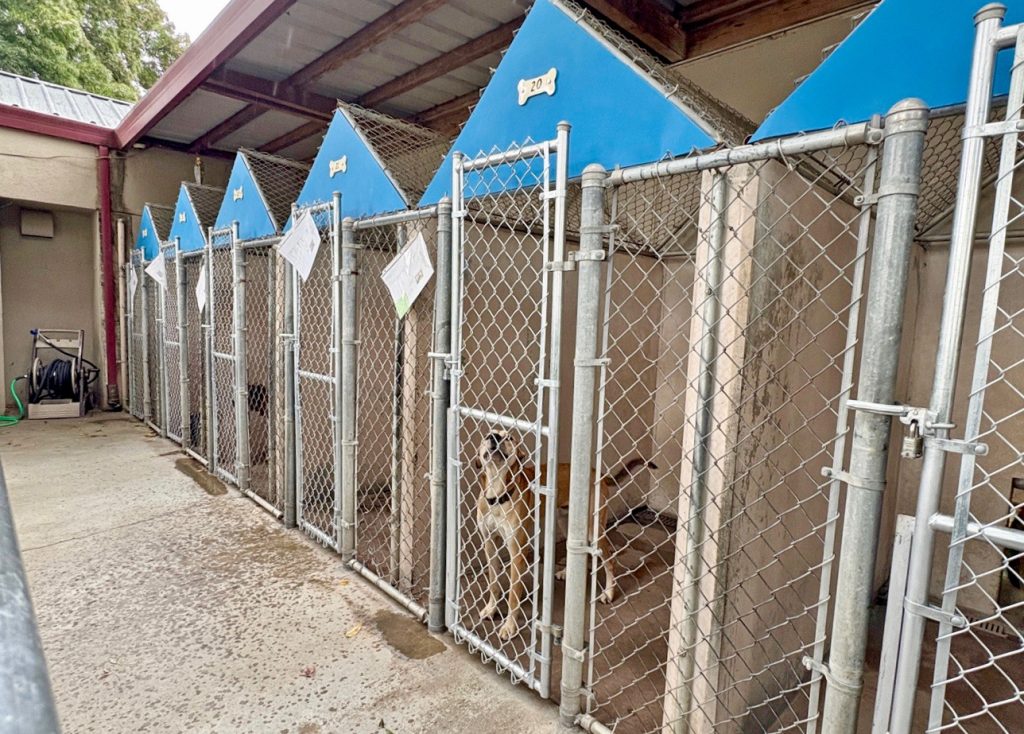
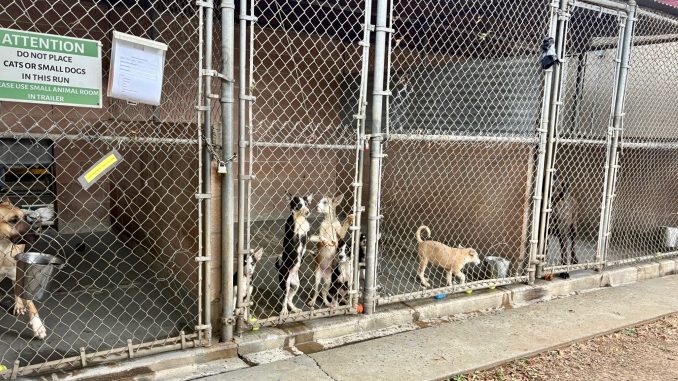
The Chico Animal Shelter was unsurprisingly at capacity before it took in the latest survivors of Whitrock-Wyatt and Petterson’s household. Gina Catallo-Kokoletsos, the Animal Care Services Manager, told CN&R that the shelter has been at or over capacity consistently for two years now, and it is regrettably far from the only one: The National Database “Shelter Animals Count” provides a 2025 mid-year report, detailing that the amount of shelters at or over capacity remains well over the trend line.
On average, dogs are residing within shelters for 47 days, and cats for 43. Bigger dogs, according to the database, are the toughest to move, and often need extra care and resource materials for their prolonged stay.
“It takes longer to find the large breed dogs homes due to multiple reasons, some of it is breed restrictions or housing, or insurance,” Catallo-Kokoletsos confirmed. “It’s hard to find a rental if you have a large breed of dog, so that’s been difficult.”
Catallo-Kokoletsos acknowledged the strain that a full shelter can cause on not only staff, but the animals as well.
“It’s hard to work in a shelter,” she noted. “We all do it because we care about the animals and we want to find a good outcome for all of them, but it does get stressful.”
Though it takes a lot of work, Catallo-Kokoletsos details the extensive care done to the shelter’s kennels to keep disease transmission low, and maximize positive mental health care for the animals despite the challenges with overcrowding. Volunteer work, as well as foster care, is essential for shelters to thrive, even more so due to overbreeding being a constant weight on animal care facilities. Luckily, the Chico Animal Shelter has a system set up to prevent sudden big drop-offs at the shelter from being catastrophic to staff and the animals currently residing there.
Catallo-Kokoletsos pointed to the massive pool of foster-care volunteers that the shelter has in their back pocket, most being returning fosters that she says care deeply about their role in the local animal care community. Catallo-Kokoletsos has also noticed a spark in abuse cases this past year, meaning her staff can always use a helping hand.
“We are getting the word out that we are here, and we have amazing animals looking for homes,” Catallo-Kokoletsos explained. “I also can’t say thank you enough to our community.”
The shelter recently waived adoption fees in the month of September, though it continues to ask for donations or support to help their animals. State grants and volunteer work from non-profit organizations are also critical.
Crusading for cats in Chico
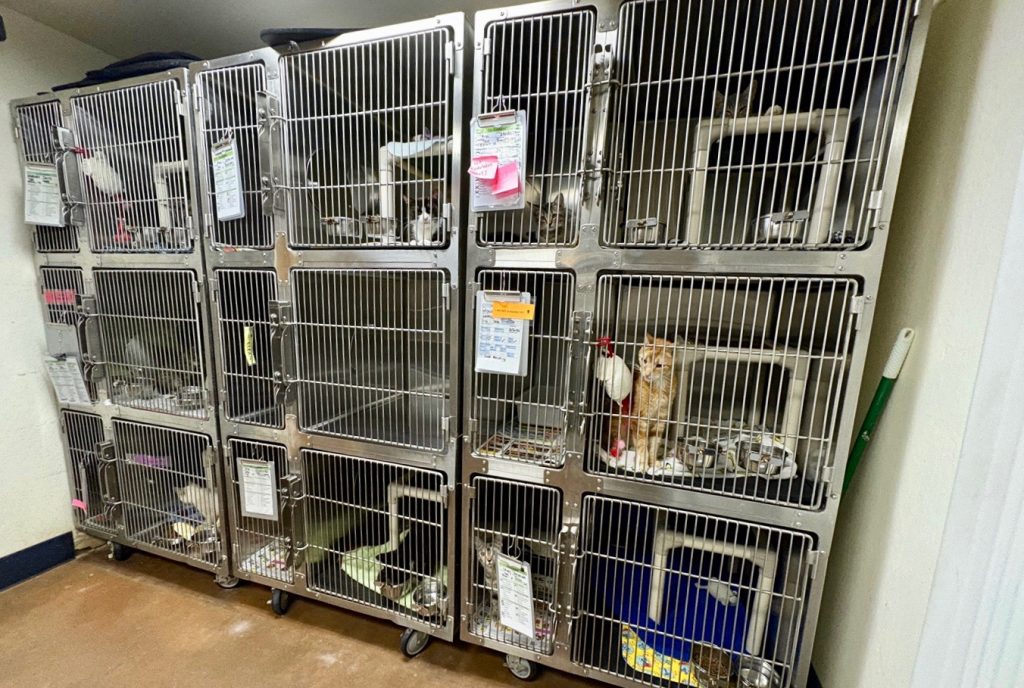
Katie Davis is Treasurer and Secretary of the Chico Cat Coalition, a non-profit sanctuary and adoption center for elderly cats. Davis has seen the vital importance of donations, and how they are keeping places like Chico Cat Coalition and other local non-profits afloat.
“They are our life blood,” Davis said of generous contributions, adding that the Cat Coalition also gets creative with drives and fundraisers.
This group that’s fighting for felines had humble beginnings in Chico.
It all started at local parks around the area, where coalition members would TNR, or Trap-Neuter-Release, cats at the parks in order to prevent mass breeding. Since Chico is a college town, there are many factors that led to animal abandonment. The cat dumping and overpopulation got so bad that a volunteer graciously donated a barn to the coalition, where members took in strays to help them get proper care and treatment, as well as improve their overall quality of life.
Some 13 years ago, Chico Cat Coalition moved to an actual shelter located on Entler Ave.
Davis reminisced on an earlier time right after Butte County’s Camp Fire in 2018, recalling that the number of cats at that time were over 60, versus the volunteers being 20 or so.
“None of us can do any of this without volunteers,” Davis reflected. “There’s constantly people moving around, and it’s all to keep these cats healthy and happy, and get them homes … Having the volunteers there, being able to spread the workload out, makes it a better environment, it makes people happier and it makes people want to come back and keep returning to do the work.”
But even with so much good will, challenges have continued to mount in recent years. The COVID-19 pandemic created a catalyst for overcrowding within shelters, not only hindering vital spay and neuter surgeries, but also forming a barrier for any in-person fundraisers to be held.
The Chico Cat Coalition started online auctions as a way to counteract the lack of funding they were experiencing with post-pandemic remote events, and realized that was more beneficial for raising money.
“It sucks not getting to be in-person anymore,” Davis remarked, “but you’ve got to look at what is going to be more beneficial for everyone.”
Friends unite
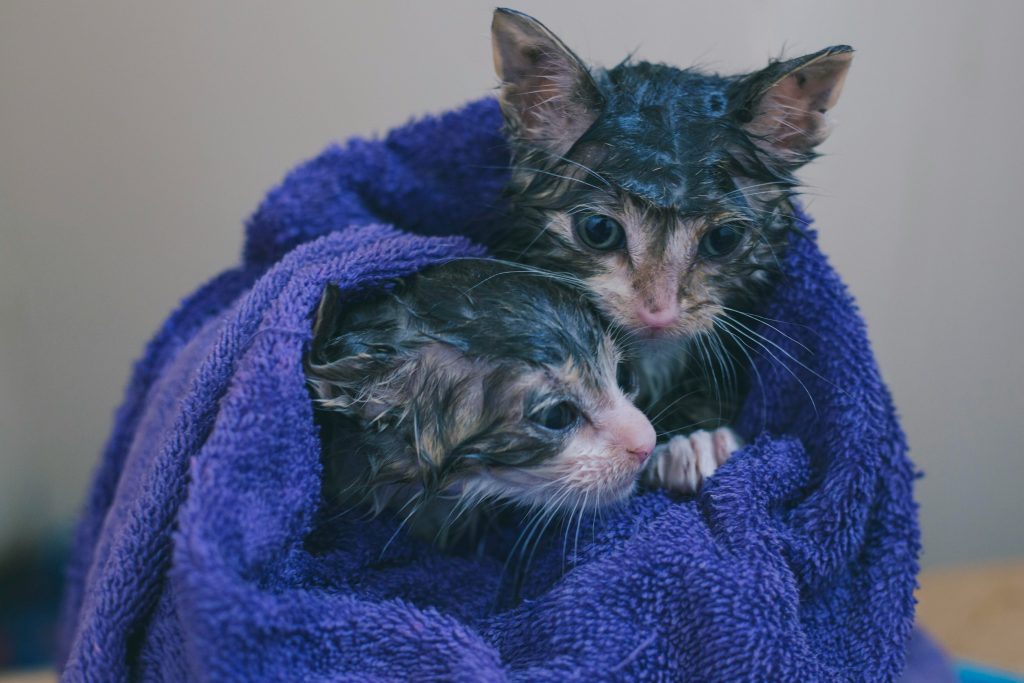
FUR, or Friends United in Rescue, is another non-profit shelter started by a group of women back in 2018, right after the Camp Fire in Butte County. Its organization moved to Chico in 2020, and continues to perform “life-saving work in Northern California communities,” according to its website. FUR members pride themselves on having an open, no cage approach, and aim to socialize the animals while keeping them safe and content.
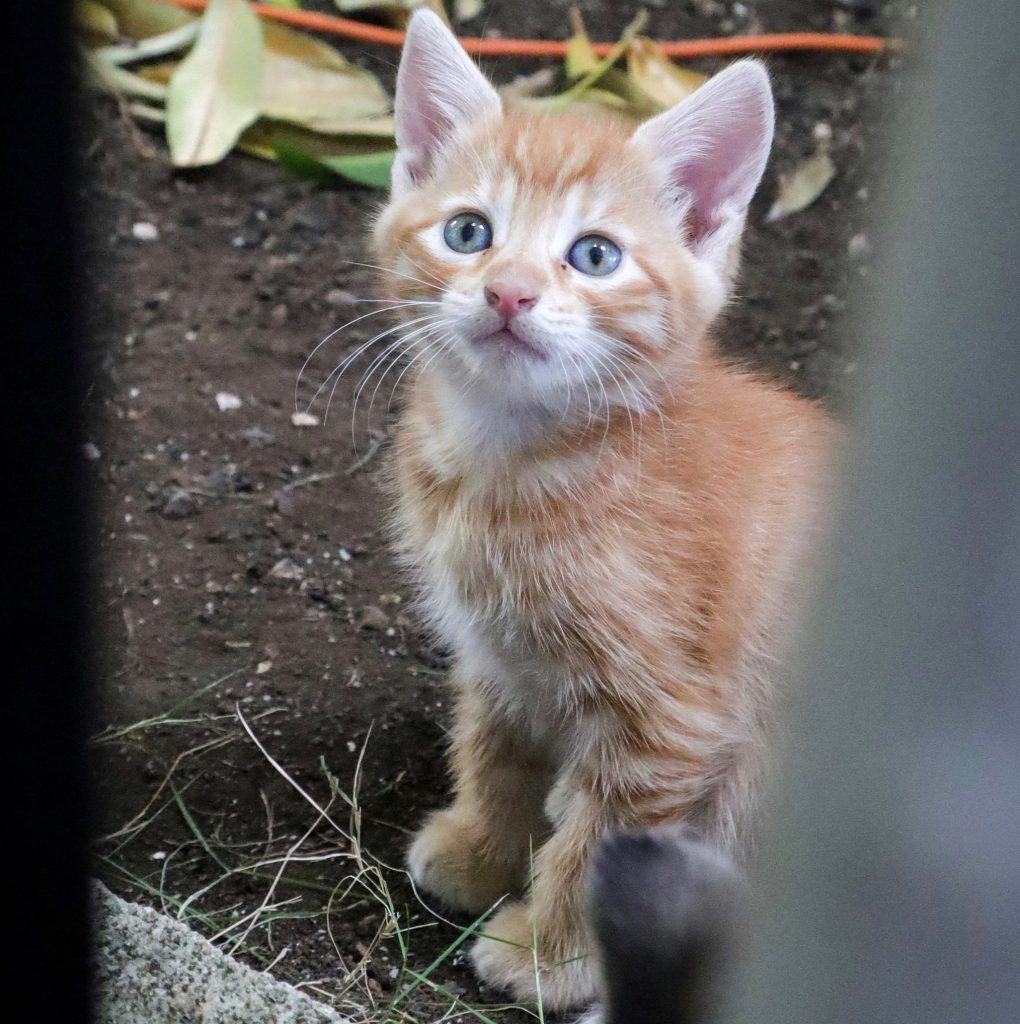
Animal abuse is only one of the leading causes for overcrowding within shelters. The populations of animals residing in shelters varies by species and time of year, with summer being a high intake period for kittens. For example, the Chico Animal Shelter’s busiest time for cat intake is during the prime warm weather months.
Lynn Flowers and Suzy Maxwell, both with FUR, point out that the hot weather can prolong kitten season past summer.
“There’s always a second and third wave of kittens aged four to five weeks, and we are going to get another wave probably in about four weeks,” is how Flowers and Maxwell put it.
One sad consequence of kitten season is that families will often turn away elderly cats for a new kitten when in search of a pet.
Flowers and Maxwell emphasize that the older cats in the shelter have been returners from previous failed adoptions, and desperately need forever homes. They spoke about their adoptions being fewer and far between in the past month or so.
FUR is in need of more volunteers, while its current members work tirelessly to keep conditions excellent and the animals happy. They have performed 525 sterilization surgeries this year alone.
Although shorter staffed, FUR remains consistent in performing fundraisers and drives to help out the animals and the community as a whole.
Upcoming fundraising events
If interested in helping out Butte County’s various shelters and programs, one option is Chico Cat Coalition’s Moonlight Meows, a silent auction running between October 26 to November 1. It is available to reach via link on their website here, as well as their Facebook and Instagram.
FUR also is hosting an upcoming golf tournament with auctions, raffles, and countless prizes, happening on October 17. More details can be found on their website here.
Be the first to comment