
CN&R chats with a musical legend and activist who is bringing her energy to the area in late August
By Ken Magri
Cyndi Lauper, that sleepy-eyed fireball of playful spirit and genuine authenticity, is coming to the Toyota Amphitheatre in Wheatland for an August 23 farewell concert.
It is the only area concert appearance for this final leg of her “Girls Just Want to Have Fun Farewell Tour.”
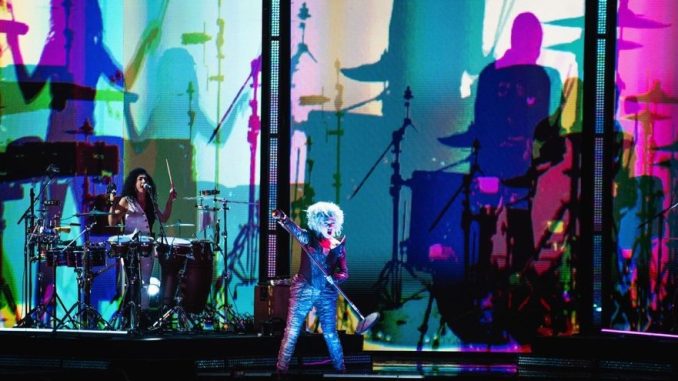
Lauper has put together a visually striking show for this 18,000 seat venue, combining art and music while showcasing the songs that made her legendary. At 72 years of age, she can still sing with power, hitting the high notes that other aging rockers can only envy.
With a mostly female band, backdrop changes, hair color changes and costume changes, even while performing, Lauper still knows how to hold onto a crowd and create a good time.
Born Cynthia Ann Stephanie Lauper in Brooklyn and raised in Queens, Lauper has become more than just a famous singer/songwriter. Her passionate social activism, especially for women and LGBTQ+ rights, has earned her respect and recognition from organizations including the United Nations.
Her songs have become integral to the struggle for acceptance and tolerance in an increasingly inequitable America.
Songwriting Prowess
Many of her fans know that Lauper was inducted into the songwriter’s Hall of Fame in 2015 for iconic songs like “Time After Time,” “She Bop” and “Sally’s Pigeons” which was written for a childhood friend who died from complications after an abortion.
Fans also know she won a 2013 Tony Award by writing the music for the Broadway play “Kinky Boots.”
But the song that became Lauper’s signature, “Girls Just Want to Have Fun,” was not originally written by her. Instead, she took a little known 1979 song and changed it into a movement.
“Girls Just Want to Have Fun” was originally written and performed by Robert Hazard, a popular Philadelphia post-punk singer. With permission, Cyndi tweaked his version in 1983 by changing the key, slowing down the tempo and rewriting some lyrics to fit a young woman’s point of view rather than a man’s.
Record company executives didn’t think it was album material. But Lauper’s synth-pop version, and the music video that went with it, became her breakthrough hit on MTV and a joyful anthem for all young women coming of age in the era of new wave music.
Likewise, “True Colors” was written by Billy Steinberg and Tom Kelly with an almost gospel feel. After singer Anne Murray turned the song down in 1986, Lauper heard the demo, which was written about the passing of Steinberg’s mother, and rearranged it into a poignant remembrance for her close friend Gregory who died of AIDS.
It won her a Grammy Award in 1987.
In a 2009 interview Steinberg admitted that “Cyndi completely dismantled that sort of traditional arrangement and came up with something that was breathtaking and stark.”
Social activism
There is much more to Cyndi Lauper than merely singing about social issues. In 2008 she co-founded True Colors United, to combat youth homelessness, especially for LGBTQ+ youth.
Since 2022, motivated by the Supreme Court’s decision to eliminate the constitutional right to abortion, Lauper has worked with Tide Foundation, creating the Girls Just Want to Have Fundamental Rights Fund, a charity she promotes at her concerts which concentrates on women’s rights and health, including reproductive care, gender-affirming care and safe, legal abortions.
She performs benefit concerts, advocates for human rights and supports organizations that help Americans with housing and food insecurity. Once homeless herself, Lauper has said, “I always figured, if you’ve got a big mouth, use it for something good.”
Our interview with Cyndi
Lauper was gracious enough to answer a few of our questions about her career and the concert tour, which ends in September with a two night appearance at the Hollywood Bowl.
CN&R: As a songwriter and singer, how has your music evolved over the decades in terms of sound or lyrics?
Lauper: “My music and lyrics have always reflected the times and what’s going on in the world. When I recorded Girls, women were – still are – being treated a certain way so I took that as my chance to use the song to address the issue, to put us in a position of power.”
“But from ‘Boy Blue’ to ‘Sally’s Pigeons’ to ‘You Don’t Know,’ I’ve always used my platform to shine a light, while still having fun, giving folks something to rally around.”
CN&R: How do you keep your voice so healthy and how do you keep that freshness in your older songs?
Lauper: “I take my craft very seriously. I do vocal lessons every day. I do mobility and stamina work outs every day. My voice, my body, my ability to perform, it’s my job and I do all I can to preserve and grow.”
“In terms of keeping older songs fresh, I try to strike a balance between being true to the studio recording but also adding in a creative flair to keep it interesting. I might try a different vocal treatment, add some improv, add a different key. It’s a lot like jazz in terms of improvising.”
CN&R: “A friend who is our age asked me to ask you, after having past rights that are now lost to younger women, how can she make a bigger social impact?
Lauper: “The way you have a voice is to be true to yourself. It’s really easy to get caught up on social media, but you have to do your own research. And once you feel like you have a grasp on an issue, from all sides, then you can become involved in so many ways.
CN&R: Can you say how? A younger friend also asked what advice would you give to a woman in her 30s or 40s who feels she is just now finding her own voice?”
Lauper: “Using your platform to share insights and information is just as important as attending marches and rallies. Maybe you want to run for a local office. Maybe you want to get more involved with a candidate that you feel strongly about – handing out info, working in their campaign office.”
“But always, more than anything make sure you get out and vote. I know it can feel like your vote doesn’t matter but it does. The writer Alice Walker said: ‘The most common way people give up their power is by believing they don’t have any.’ “Don’t give it away. Hold tight. Vote.”
AWESOME!!!!!