
By Dan Bacher
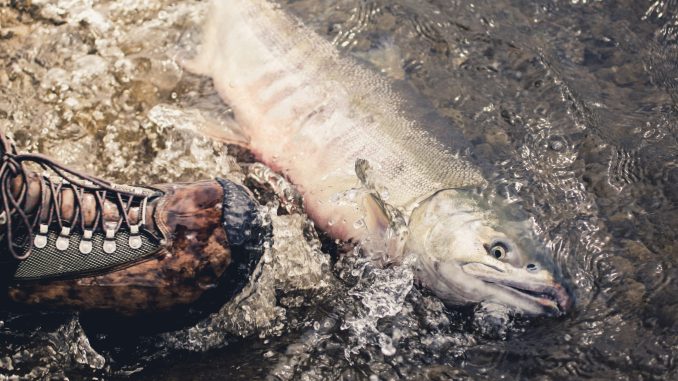
The State Water Resources Control Board has just released its controversial proposed updates to the Sacramento Delta portions of the Bay-Delta Plan. The proposal includes both the Big Ag-backed voluntary agreements on water, strongly opposed by tribes, environmental groups, fishing organizations and environmental justice organizations, and what is being described as a “regulatory pathway.” Opposition is particularly worried about how the board’s updates could effect highly threatened wild salmon populations in the Feather and Sacramento rivers, which also swim through the Delta.
Governor Gavin Newsom cheered the release of this update proposal — and, as usual, announced proposed legislation for gutting the California Environmental Quality Act, or CEQA, to fast-track the implementation of the process.
“I am proud to see the healthy rivers and landscapes program represented in this plan update,” Newsom said in a statement. “It’s a testament to California’s commitment of a collaborative, science-driven approach to managing our water for the benefit of our communities, economy and fish and wildlife.”
The governor added, “However our work is not yet done — I have proposed legislation to create a CEQA exemption for all water quality control plans that would accelerate the time it takes to get these critical plans done by removing unnecessary and redundant process requirements. We’re done with barriers and obstacles to our state’s success: We must work together to protect our natural resources for the benefits of the habitats and people of our state.”
Two salmon groups, Save California Salmon and the Golden State Salmon Association, blasted the inclusion of the voluntary agreements in the update.
“The Bay-Delta Water Quality Control Plan (Bay-Delta Plan) update is necessary to protect the water quality in the Bay-Delta and Sacramento River watershed,” noted Regina Chichizola, Executive Director of Save California Salmon. “This watershed is critically important to salmon, tribes, and the tens of millions of Californians that get their drinking water from, or live in the Delta.”
Chichizola concluded, “Water is our most precious resource, and it is extremely over-allocated due to agricultural diversions: This plan should be guided by science, not politics or profit, to ensure enough water is left in the system for ecosystems, fish, and clean drinking water.”
Scott Artis, Executive Director of the Golden State Salmon Association, also responded to a briefing by the Water Board on the Bay-Delta with profound alarm.
“Today’s NGO briefing by the State Water Resources Control Board on the Bay-Delta Plan process left conservationists, fishermen, and tribal and environmental justice advocates deeply alarmed,” Artis said. “The Board appears to be laying the groundwork to approve the Voluntary Agreements (VAs)—a controversial, deeply flawed proposal designed behind closed doors by the very water users who would benefit most from it.”
Artis also observed, “This is a sad day for the State Water Board and one more on a long list of bad days for salmon. The Board seems to be collapsing under pressure from the Governor to approve the fatally flawed voluntary agreements. The [agreements] are a scam that could cost taxpayers billions, enrich water agencies and make the rivers even sicker. The [the agreements] set the stage for even more damaging diversions by the massive Delta tunnel. Commercial fishing in California has been closed for 3 years because of unsustainable water diversions. This looks like a plan to kill California’s most important wild salmon runs and fishing jobs.”
Artis believes that at the heart of the voluntary agreements is a “deceptive premise” – the offer modest ‘environmental water’ while setting the stage for massive new diversions from projects like Sites Reservoir and the proposed Delta tunnel, which could hurt the overall conditions in the Delta and the rivers that flow into it.
“Taxpayers are being asked to foot the bill—over $2 billion—most of which would go directly to the water agencies that helped write the VAs,” Artis charged. “Meanwhile, in critical dry years when ecosystems are most vulnerable, the VAs offer little to no new water: zero on the Yuba, Feather, and Mokelumne rivers, and a meager 2,000 acre-feet on the Sacramento River, the state’s largest.”
The leader of Golden State Salmon Association stressed that the voluntary agreements also mirror the failed CALFED Environmental Water Account, which allowed state water projects to worsen environmental conditions while financially benefiting water users. For fish advocates, this means History is set to repeat itself—only on a much larger and more destructive scale.
“Equally troubling is the exclusion of key voices: Tribal leaders, fishing communities, environmental justice advocates, and conservation groups were shut out of the process,” Artis said. “The Governor’s office has refused to meet with opponents, despite repeated requests and the dire implications of the plan … Despite claims of new environmental benefits, the water proposed in the [agreements] has been shrinking for years, and there’s no contingency if the anticipated $900 million in federal funds fails to materialize—which appears likely … If the [agreements] falter, it could take years before the State Water Board reevaluates the situation, leaving already declining salmon and imperiled rivers in an even more precarious position. One thing is clear. The Voluntary Agreements aren’t a solution—they’re a water diversion tactic dressed up as progress, with consequences California’s natural heritage, people and communities can’t afford.”
The July 24, 2025 State Water Board presentation on the agreements can be viewed here: Revised Draft Sacramento/Delta Updates to the Bay-Delta Water Quality Control Plan
The proposal was released as Newsom is trying to fast-track the Delta Tunnel, Sites Reservoir and the voluntary agreements in order to export more Delta water to his Big Ag donors and Southern California water agencies. Conservations and independent experts fear that the two projects, in tandem with the voluntary agreements, will seal the doom of imperiled Sacramento River winter, spring and fall-run Chinook salmon, Delta smelt, longfin smelt, green sturgeon, white sturgeon, Central Valley steelhead and other fish species, which are already in unprecedented crisis due to the already massive water exports to corporate agribusiness and Southern California water brokers, along with other factors.

So besides the reporting of bad news and mention of organizations opposed, what’s being done about it? Any lawsuits, injunctions, protests, other? If there are none, say so. If there are, say that too. It seems like incomplete reporting.