
Suspect was a fugitive who frequented open mic nights in Butte County
By Ken Magri
On June 28, a Chico resident was taken into custody by local police officers on a fugitive warrant at the request of the Josephine County Sheriff’s Department.
Mark “Marcus” Anthony Sanfratello, 71, is now a suspect in the murder of Teresa Joann Peroni, 27, who disappeared in Southern Oregon in 1983. What began as a missing-person case that went cold for over 40 years has recently been re-opened.
Sanfratello is currently an inmate in the Butte County jail, awaiting extradition to Oregon while the Josephine County district attorney prepares for a possible trial on murder charges.
This 42-year old story of Teresa Peroni’s death is a long and tragic tale of justice delayed by a number of factors, including faulty information, lost evidence and law enforcement inactivity.
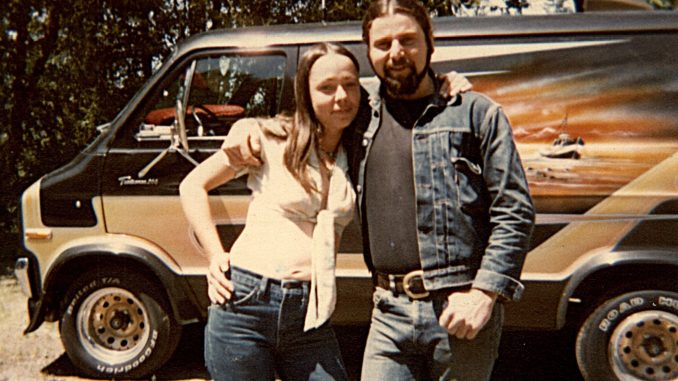
On or around July 4, 1983, Teresa Peroni was last seen at an outdoor gathering on Illinois River Road in Selma, Oregon, which is 20 miles southwest of Grants Pass. Witnesses saw Peroni walking into the surrounding forest with Sanfratello, who she was dating at the time, according to a recent press release from the Josephine County Sheriff’s Department.
Then Peroni disappeared.
“During this [1983] investigation, the Josephine County Sheriff’s Office found the disappearance to be suspicious in nature,” authorities said. “However, after the investigation with the Josephine County District Attorney’s Office, it was determined that there was not enough probable cause to move forward with criminal prosecution.”
But several developments between 1983 and 2025 eventually coalesced into what became a first-degree murder case.
A July, 2024 podcast titled “Is Teresa Peroni 1997 Jane Doe?” provided many compelling details, more than had ever been made public. Researched and written by Gwen Barringer and narrated by John Lordan of the Seriously Mysterious podcast, it explained the back story of Peroni and Sanfratello while asking whether a skull found in 1997 could be that of the victim.
Podcast details a timeline of events
Peroni and Sanfratello had a volatile relationship. This was documented in the podcast by the recollections of family and friends. Several months before the disappearance, witnesses reported that the couple’s verbal arguments would repeatedly escalate into violent exchanges.
Peroni was 5’ 4” tall with blue eyes, long dark hair and weighed around 130 pounds. Friends described her as a free spirit, but said Sanfratello had a more controlling nature. Several arguments originated from Sanfratello’s suspicion that Peroni was sleeping with a mutual friend nicknamed “Rat Trap.”
At the same time, Peroni and Sanfratello were hanging out with a loosely organized communal-living group, an offshoot of a Bristol, Vermont group called the Peoples Earth Park.
This Oregon group was known to use drugs like MDA (a synthetic psychedelic/stimulant) and LSD. Members lived on a “ranch,” consisting of several acres of private land in Selma, Oregon with at least one structure on it.
Although Peroni and Sanfratello had been fighting earlier on the day of her disappearance, the pair was seen walking into the forest together to sleep for the night.
But nobody saw them come back out.
Peroni’s family in Grants Pass reported her missing a month later and an official investigation began. But the results were inconclusive as to whether any criminal activity had taken place. One witness gave law enforcement faulty information, claiming to have seen Peroni drunk in a nearby bar later in July.
The District Attorney’s Office let the case go dormant.
In July, 1984, an unknown person delivered a brown purse to the Josephine County Sheriff’s deputies. Inside were papers that identified Peroni, including her Oregon ID. The purse also contained her medication for epilepsy. Peroni was an epileptic who regularly received medicine from the county health clinic.
A search team then went out to the Illinois River Road location where Peroni was last seen and searched the land with a cadaver dog. But how extensively they searched the 20-acre property is unknown, and nothing was found.
At that time, Sanfratello was only considered “a person of interest.” A year later, he moved to Northern California where his violent tendencies got him into deep trouble.
In August, 1985, Sanfratello was arrested in Yreka for stabbing his new wife and step-daughter. The 14-year-old-daughter told law enforcement she “had been beaten, choked, stabbed and sexually assaulted by Marcus Sanfratello,” according to the podcast.
Sanfratello was charged with two counts of attempted murder, one count of rape and one count of burglary. He pleaded guilty to the attempted murder charges and received a prison sentence of 15 years, four months, the maximum penalty.
Human skull found
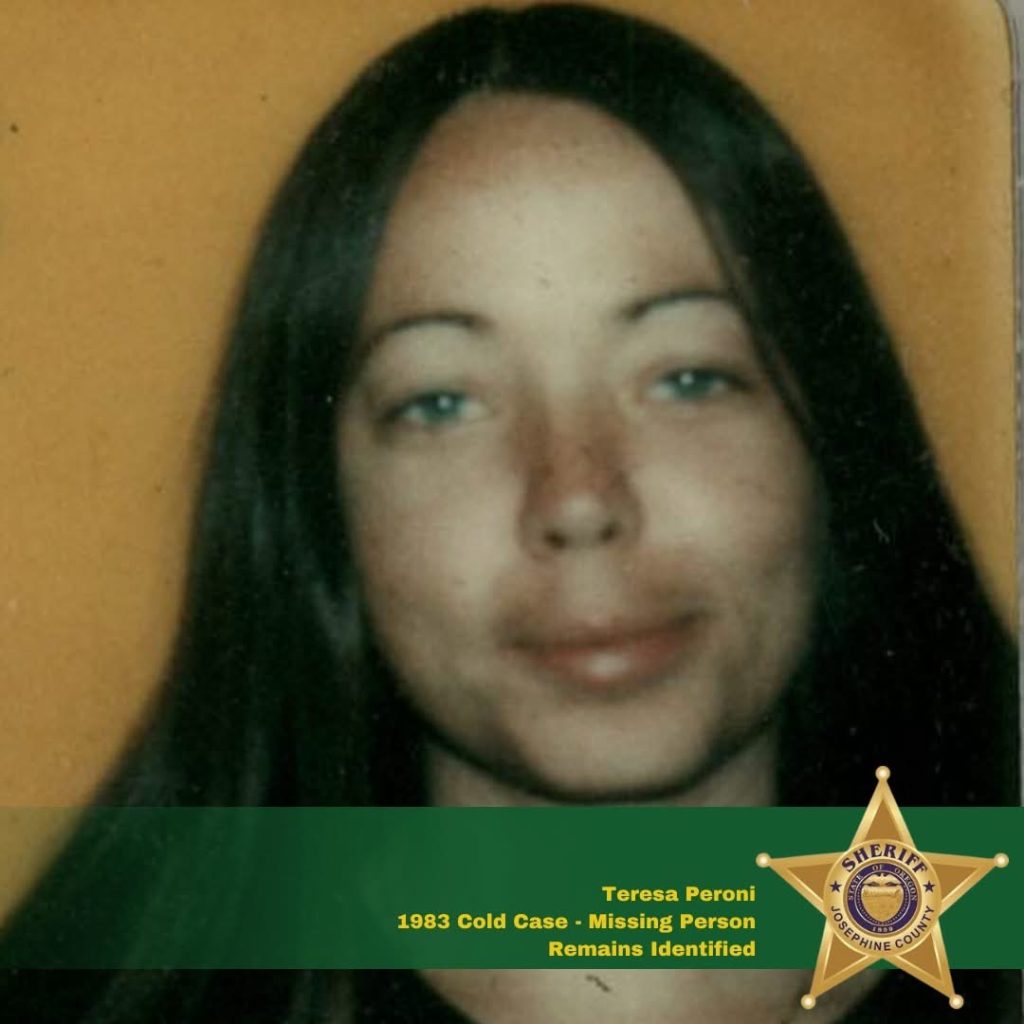
In 1997, a human skull was found on a property in Selma, not far from the location where Peroni and Sanfratello had last been seen together.
Investigators labeled the skull a “Jane Doe” piece of evidence. But remembering the Peroni missing-person case, they sent in a sample to the FBI for a DNA analysis along with samples they acquired from Peroni’s sister.
The skull sample turned out to be a tooth filling, which does not contain any DNA. An analysis could not be performed and the case went cold yet again.
Meanwhile, Sanfratello had been released from prison in the late 1990s and eventually relocated in Butte County. It is not known how long he had been living in the county, but before moving to Chico he is reported to have had a residence in Gridley.
In 1999, Sanfratello was convicted by the federal Eastern District of California for embezzling government property, according to an account by the New York Times. He served two years of probation and was fined $4,000.
In 2004, a new Josephine County investigator, Detective Ken Selig, picked up the Peroni case again. He wanted to send the FBI a better DNA sample from the Jane Doe skull for analysis.
But the skull was lost and nobody in Josephine County could find it.
In 2020, after years of searching, the skull was located in a genetic genealogy lab at the University of North Texas. Josephine County authorities had sent it there for safe storage, then forgot about it.
Tests were finally done and the new DNA sample from the skull matched that of Peroni’s sister.
By 2022, the Jane Doe skull file was sharing the same exact case number as the Peroni missing-person file. This led the podcasters to presume that Josephine County authorities now considered this to be a murder case.
Nevertheless, it appeared that little was happening.
Then, the 2024 podcast was released, detailing facts obtained through records requests that had been lost to time. The podcasters did not know that just before its release the Peroni cold case was reopened and active again.
Barringer was contacted by Josephine County Detective Sergeant Kile Henrich. The detective requested that she keep her reporting on the down-low, as he was the one who reactivated the case and might be close to an indictment.
Finally, on June 27, 2025, a Josephine County Grand Jury indicted Sanfratello on murder charges.
Suspect living in Chico, attending open mic events
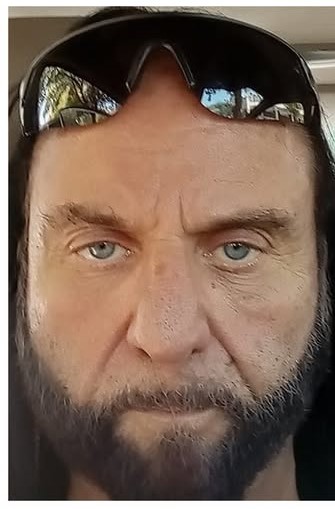
Sanfratello lives in an apartment on 1100 block of East 8th Street in Chico. Local law enforcement was asked to make an arrest in accordance with California’s extradition laws. The suspect was taken into custody without incident and Peroni’s next-of-kin was informed of the arrest.
While living in Chico, Sanfratello often attended open mic events at the Tackle Box Bar and Grill on Park Avenue.
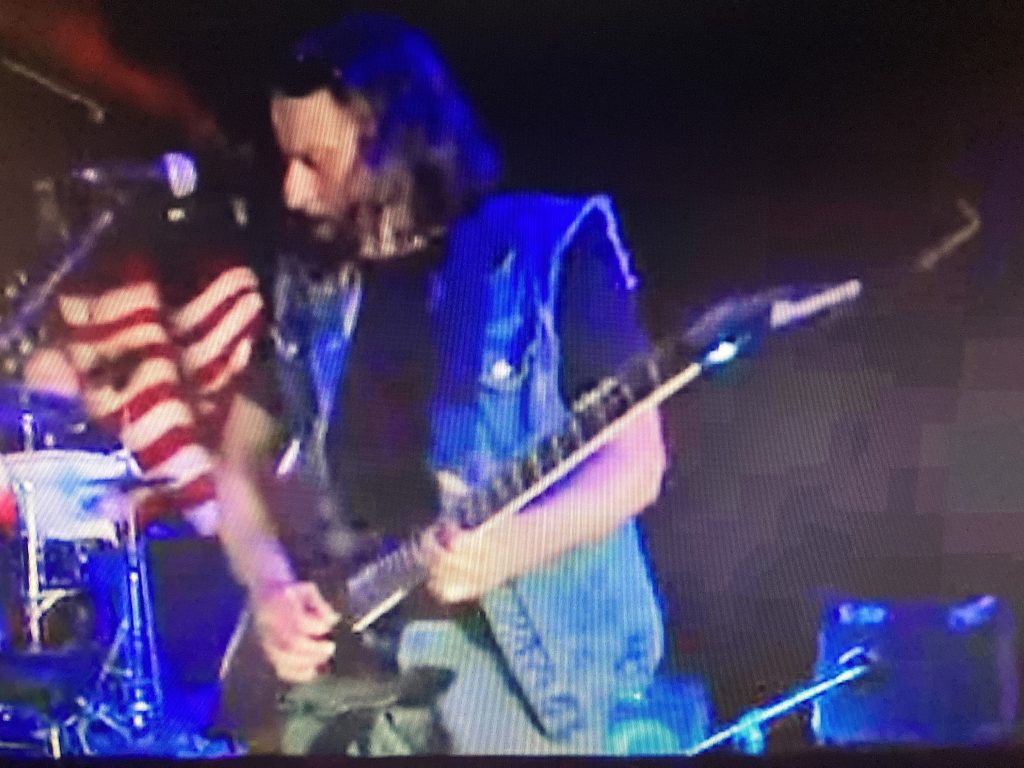
“He went to karaoke every Tuesday and Thursday, always wore a leather jacket, I think he had a motorcycle,” said Chico resident Antonina Pennisi. “He was very quiet for the most part, used to sing heavy metal or rock songs.”
Chico resident Jodi Foster posted comments about Sanfratello on Facebook, describing his arrest as “scary.” Foster added that “on numerous occasions he had tried to connect with some of the ladies at Open Mic, to date. The ladies were always very worried afterwards.”
Another Chico resident described Sanfratello as “quiet,” “angry,” “radical” and a capable guitar player.
“He told me his wife died a few years ago when they lived in Gridley,” one local, who asked not to be named, told CN&R. “He then moved to Chico and lived at the Jesus Center until he got his apartment.”
Did the 2024 podcast get the Peroni case reopened?
Podcasters Gwen Barringer and John Lordan spoke with News & Review after learning about Sanfratello’s arrest. Lordan was quick to credit Barringer with most of the research and writing on this case.
Barringer is a Josephine County journalist who runs a non-profit organization called “Josephine County Missing Persons Project” through a Facebook page.
“Supporting Gwen’s work and collaborating with her has brought many meaningful moments, and this is certainly one I’ll never forget,” said Lordan. “I’m always proud of her work, but today I’m also very grateful to Ken Selig, Dr. Nici Vance, the Oregon Department of Justice, the Josephine County Sheriff’s Office, the Josephine County District Attorney’s Office and the Chico Police Department for giving the Peroni family this long-overdue shot at justice.”
For her part, Barringer was surprised to hear an actual arrest had been made, and unsure about what affect her podcast had on developments in the case.
“I have been hoping for this identification since 2019,” she told News & Review. ”I contacted the state medical examiner for several years, and tried to get information from the sheriff’s office; that didn’t really work,” she said.
Barringer was the one who tracked Sanfratello to his Chico address.
“As far as timing goes, I do think the podcast was at least part of the chain of events that helped this case move forward,” Barringer reflected.
In the end, Barringer explained that these types of cold cases lose priority over the years. Changes in personnel and case familiarity, the lack of law enforcement resources and the need for better DNA crime research technology can team up to defeat the cause of justice.
But this time the patience and perseverance of a few motivated people finally brought the Teresa Peroni case closer to a conclusion.
“I’m pleased to have been a small part of it,” said Barringer.
Be the first to comment