
In Tehama County, resource conservation is less about a hands-off approach to nature and more about how residents and agriculture work with the land to maintain a mutually beneficial relationship. For the Resource Conservation District of Tehama County, composting is one area where new environmental needs can blend with traditional farming practices.
The RCDTC seeks to conserve, manage and improve the natural areas and resources within their community. Funded by grants, the scope of RCDTC’s projects often involve field work, research, mapping and technical assistance while the areas of focus follow the needs of the region—such as fish passages, defensible space or water efficiency.
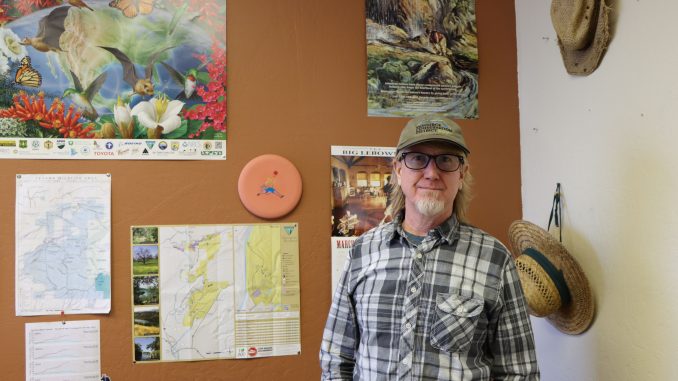
A project manager for more than 10 years, Kevin Greer’s current work includes a mobile irrigation lab and a partnership with the California Department of Food and Agriculture’s Healthy Soils program.
Designed to provide educational and financial support for the implementation of farm and ranch conservation management, the Healthy Soils program uses cover crops, mulch, conservation plantings, no- and low-till and composting practices to create healthier soils, sequester carbon and reduce greenhouse gas emissions.
As a technical assistance provider for the program, Greer helps local growers and ranchers reexamine traditional farming methods.
“Some farming practices that have been practiced for many years are compacting the soil, stripping the soil of nutrients,” Greer says.
Greer sees cover crops and composting as two big ways to achieve healthier soil while addressing some of the generational agriculture practices whose harmful effects have compounded over the years.
“Composting can take some of what can be considered waste—leaves, branches, compostable material,” Greer says, “and convert it into nutrient-dense compost. That compost can be added into existing soils to help improve the nutrients within that soil.”
In general, growers are seeking a healthy soil for the best return but, season after season, crops deplete the available nutrients, and machinery and chemicals may compact the soil and strip it of cover crops.
“When soils are barren of nutrients and compacted and we get rain events,” Greer says, “those rain events will move that loose, unhealthy soil and sediment and create runoffs. That water full of sediment washes downstream, into creeks and streams, and makes it more challenging for animals that might be using those.”
In these downstream habitats, increased turbidity—the amount of suspended matter in the water—can affect the water quality and food web, impacting everything from algae blooms to large predators.
Alternatively, a healthy, loose soil increases water filtration so the ground absorbs the water, whether it’s rain or irrigation. Water filtering into the ground stores the water where the plants need it and could decrease or delay irrigation needs—which, Greer points out, leads to a reduction of greenhouse gases created from pumping water.
Additionally, the absorbed water feeds and refills underground aquifers.
“The more we can keep recharging that storage, the reservoir of water underground,” Greer says, “the more resilient we’ll be and we’ll have a greater storage bank of water in the state.”
In the more than five years that RCDTC has helped bring the Healthy Soils program to Tehama County, Greer says he’s seen a growing interest and involvement in Tehama and surrounding counties.
“People are really appreciative that the programs are available,” says Greer, who adds he’s seen the workshop attendance and applications grow over the years.
Greer attributes the increased involvement to both a growing familiarity with composting practices and the realization amongst the agricultural community that this is an important issue for the state—and that the state is willing to put money into these practices so the cost isn’t prohibitive for the grower.
“I think composting is the No. 1 thing growers are applying for through this program,” Greer says, and many growers continue some form of composting after it ends.
Shifting agricultural methods has become increasingly dire as the landscape changes through farming practices and weather patterns.
“These pretty severe droughts we’ve had over the last 10 years,” Greer says, “the soil profiles have gotten really dry and really depleted of nutrients.”
Agriculturally, that has to be addressed and Greer believes the manner in which it’s addressed will determine if the dangers are compounded through traditional means or somewhat soothed by a deliberatively holistic approach.
“These practices can be a huge mitigation strategy when we get into these more extreme climate events of extreme drying or extreme rain,” Greer says.
As the landscape shifts, the introduction of new strategies, such as composting—assisted by Greer and likeminded teams—will assure that growers are continually supported as they face new challenges from a familiar front: weather.

For more information on SB 1383 and how it will affect Tehama County residents, visit www.tehamacountylandfill.com. This article was funded by a grant from CalRecycle.