
Critics say initiative ‘fails to respect tribal nations and local economies in the North State’
By Dan Bacher
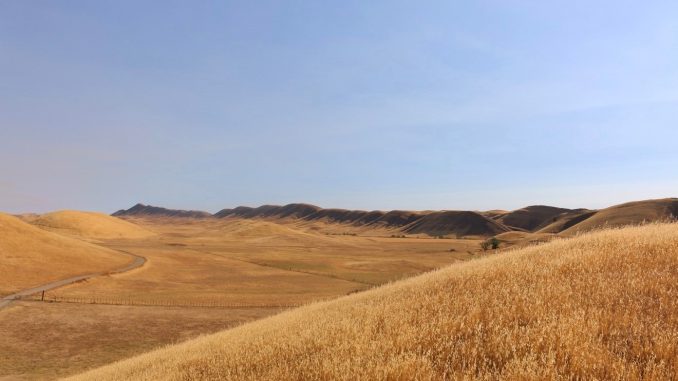
The U.S. Department of the Interior just approved the Record of Decision, or ROD, for the controversial Sites Reservoir Project that’s slated for the Maxwell community and edges of Glenn County.
The ROD released last week authorizes the Bureau of Reclamation to provide up to 25% of the total cost for the 1.5 million acre-foot off-stream reservoir.
Designed to capture and store water during wet periods, for later use in dry years, federal officials claimed that the project will “strengthen reliability for communities, agriculture and the environment” across the state.
“President Trump made clear that federal water projects must deliver real results for American families,” Secretary of the Interior Doug Burgum said in a statement. “This administration is getting it done in record time. The Sites Reservoir Project and the gains achieved over the past year demonstrate how a disciplined, mission-focused approach can expand water reliability for communities, agriculture and the economy.”
Fritz Durst, Chair of the Sites Project Authority Board of Directors, echoed Burgum’s assertions about what Sites could do for California.
“This milestone decision reflects years of rigorous analysis, collaboration, and a shared commitment to advancing a project that balances our water supply needs with protecting the environment,” Durst suggested. “We’re grateful to our federal partners, who have helped make this project possible and look forward to advancing Sites in the coming year.”
However, environmental groups, Native tribes and fishing organizations condemned the Trump administration’s approval of Sites’ ROD. Many expressed that it comes as no surprise, especially following the Trump administration’s rewriting of the plan for Bay-Delta water operations at the same moment that wild salmon populations in the estuary are in danger of collapse.
“Sites Reservoir does not create new water or improve reliability for most Californians, instead it negatively impacts drinking water quality, and salmon, in the Sacramento River and Bay Delta while providing little local benefits,” Save California Salmon’s Executive Director Regina Chichizola told reporters. “It is a costly boondoggle that uses public money to subsidize a private reservoir while raising Californian’s water bills, harming salmon and water quality, and failing to respect tribal nations and local economies in the North State.”
Chichizola added that the state and the federal governments have already committed billions in public funding to the private reservoir “even though we will rarely be able to fill it.”
She went on to emphasize that Sites Reservoir would divert water from the already over-allocated Sacramento River, along with the Trinity River, a tributary to the Klamath.
“The water would mostly benefit a small group of powerful war interests, while Californians are left to pay the price through higher water bills, degraded water quality and climate impacts,” Chichizola argued. “Critics say the reservoir does not create new water, it re-allocates already scarce water away from rivers, fish, and communities, and the money would be better invested in replenishing ground water supplies.”
Opponents also decry what they view as a lack of meaningful tribal consultation.
“Tribal nations were not meaningfully consulted on a project that directly impacts our waters, sacred places, and our salmon,” noted Josa Talley, a Karuk Tribal member and Communications and Outreach Coordinator at Save California Salmon. “That alone should have stopped this project. It is reckless to ignore Tribal knowledge and push projects that further destabilize rivers, devastate our already ailing salmon runs and the industries and cultures they sustain, and call it ‘progress.”
Additionally, commercial fishermen associated with SCS have pointed out that creating a massive new diversion in the Sacramento River “would not only be the nail in the coffin of the salmon fishing industry, but also would be used to fill the controversial Delta Tunnel.”
A final point of debate around the Sites proposal is that, according to critics, a recent contract ensures that many of the construction jobs tied to the reservoir will go to out-of-state contractors.
“The fact that the Sites Authority, a private entity with public funding, has gone back on its promise to provide local jobs and benefits has further complicated this project and highlights that its promise of environmental benefits has also been proven false,” charged Chichizola.
Keiko Mertz, Policy Director of Friends of the River, said the price tag and priorities around Sites both run afoul of good governance.
“The Record of Decision was expected, and does not resolve the fundamental problems with Sites Reservoir,” Mertz emphasized. “Sites is still a nearly $7 billion gamble that delivers little water at enormous cost, threatens rivers and fisheries, and distracts from real solutions.”
Be the first to comment