
By Odin Rasco
Although the protracted government shutdown was brought to a (potentially temporary) close mid-November, the shakeup that it brought to countless services including the Supplemental Nutrition Assistance Program (known to Californians as CalFresh) has put a new spotlight on food insecurity issues nationwide and locally. With further impacts to CalFresh programs set to come soon — federal cuts threatening changes in eligibility requirements and funding — people in Butte County who rely on such assistance to stay fed might still be in for hard times in the days ahead.
When debate in Congress over funding the United States government hit an effective standstill, the gears of government began to grind to a halt on Oct. 1. As the days turned to weeks, eventually tallying up to an historic 43-day shutdown, government employees either had to stop working, or, in the case of air traffic controllers, had to continue working without pay; similarly, services funded by the government also were put on pause. Although government rules for SNAP included provisions meant to keep it operating during a government shutdown, the Trump administration pushed against such measures. Court orders from judges pushed the administration to open up $5 billion in funding for the program, but continued pushback from the White House eventually culminated in an administrative stay issued by the Supreme Court, which allowed the administration to avoid paying an additional $4 billion to fully fund SNAP during the shutdown.
The net result of the shutdown and the White House’s move to underfund SNAP was a diminished disbursement of assistance to those who were part of the program when November began. More than 42,000 Butte County residents receive CalFresh assistance — about 1 in 5 people, countywide — and nearly all of them saw delayed or lower payments in November before the shutdown concluded, according to Cristi Roach, Assistant Director of the county’s Employment and Eligibility department.
“For the first seven days of November, almost everyone who was supposed to be issued funds experienced a delay,” Roach explained. “This was unprecedented; there isn’t really any playbook to understand where this could possibly go, but I am grateful participants have been issued their benefits this month.”
Roach celebrated the partnerships the county has with local organizations and food banks that put in particular effort to help friends and neighbors facing difficulties during the interruption to SNAP payments. Speaking with the Chico Enterprise-Record in October, Community Action Agency of Butte County CEO Tim Hawkins said the North State Food Bank was preparing for an “unprecedented” rise in demand at its food pantries during the shutdown.
The North State Food Bank wasn’t the only food-distributing entity in the region that saw a jump in need during the shutdown. The Salvation Army Chico Corps food bank faced challenges on multiple fronts, according to Ashley Mitchell, property and logistics manager. Mitchell noted that their food distribution services in months even preceding the government shutdown not only saw an uptick in need from the community, but a drop in food available from distributors and community donations due to rising costs across the board.
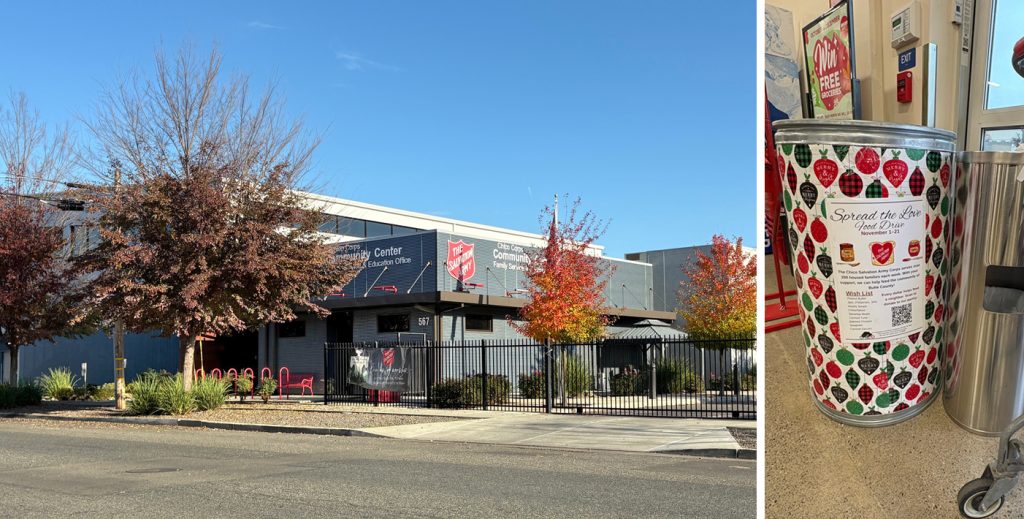
“We had already been struggling a little bit even before,” Mitchell explained. “We were not directly impacted, but our suppliers were. Then with the government shutdown, we noticed in the people that come through and receive food, the anxiety level was very, very high. We had people that we haven’t seen for months that were here. We ran out of food faster. There was definitely a lot of stress, a huge impact. We definitely saw a big uptick.”
The Salvation Army’s bank has hit capacity on the number of local residents it can serve; Mitchell recommended Chico residents looking for assistance make use of findhelp.org, a resource designed to help people find local food banks and other forms of assistance easily.
Many college students are faced with a different challenge when it comes to food insecurity: Full-time students typically do not qualify for SNAP assistance at all, unless they meet specific exceptions, according to the US Department of Agriculture. A resource for Chico State students and faculty established in 2013, the Hungry Wildcat Food Pantry serves around 5,000 students a year and around 500-700 students daily, according to Basic Needs Director Leah Slem. Their pantry also saw a rise in demand during SNAP disruptions.
“We estimated that we have 2,000 students on SNAP,” Slem noted. “At the Pantry, we saw an average of 130 more visits per day during the first two weeks of November. We received over 600 applications for emergency aid and approved 469 students. And we offered free meals in the dining hall daily for the first week of November, with 2,238 swipes. Students on SNAP are juggling school, rent, and rising food costs. While SNAP was delayed, we saw Pantry lines grow, shelves empty faster, and more students applying for financial assistance.”
Seeing the rising need in their community, other organizations in Butte Country started to explore ways they could help provide food for those in need. The Chico Natural Foods Cooperative recently rolled out a new program called the Full Plate Fund, an emergency discount program intended to help low-income shoppers. The USDA does not allow businesses to provide discounts to SNAP recipients; instead, the donation-funded program provides a 10% discount for customers who qualify for a variety economic need services such as the PG&E CARE Program, SSI, SSP, Medi-Cal, Medicaid and more.
“It was established in response to what looked like the SNAP benefits not happening and trying to come up with a way to make things a little less painful, a little more affordable,” Co-op Interim Manager Holly Riggs explained. “It’s a donation; the way I look at it is a donation from neighbor to neighbor.”
The program was initially established to run through Thanksgiving, but donations are still being accepted online.
Seeing an opportunity to use their space to assist the Chico Food Project, The Museum of Northern California Art established a space to encourage and collect nonperishable food donations. The donation drive is set to continue through Dec. 12, after which the collected food will be given to the Chico Food Project.
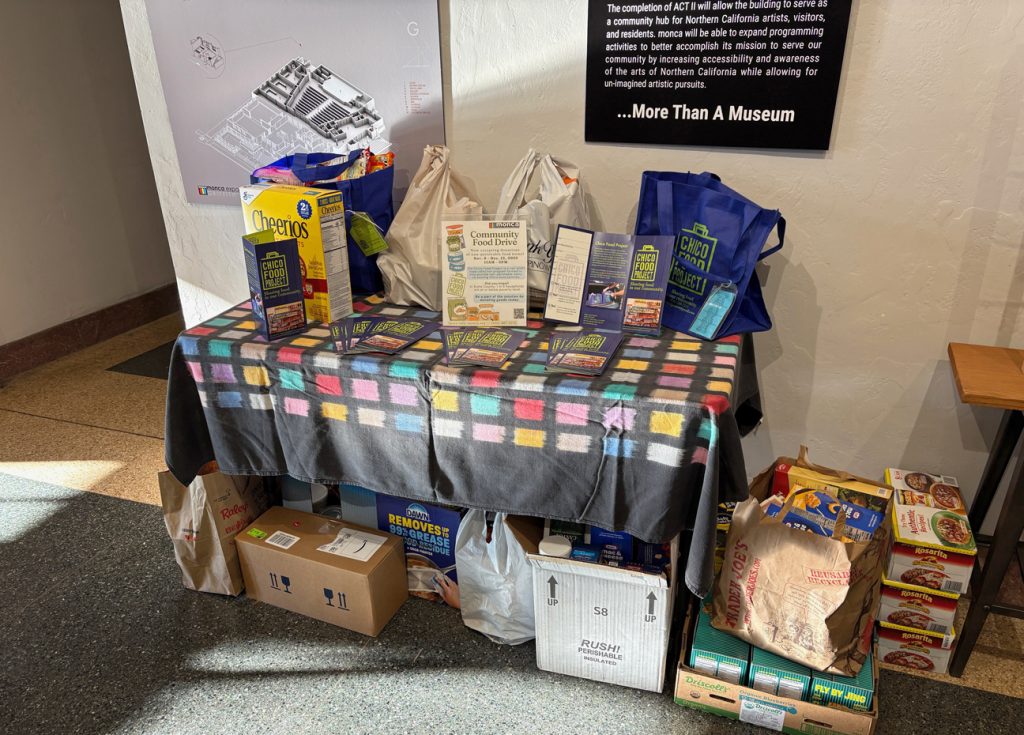
“Our emphasis for the past year has been on art as health and healing, and this just kind of fit right into what we’ve been doing,” explained monca Executive Director Pat Macias. “This is a chance for somebody who doesn’t want to jump right in and take a class feel like they’ve done something and helped somebody else.”
Since the drive started, Macias has often found piles of canned food waiting for donation set out front before the doors open in the morning.
“It feels like everybody is working together as a community to do good things, and that’s monca,” Macias added. “They want to be a part of that. We want to be a part of that.”
Butte-Glenn 211 is the long established local central hub for connection to community resources including food assistance. The Butte-Glenn 211 resource database includes a comprehensive listing of approximately 80 food pantries including information on distribution dates, locations, eligibility, transportation and more. Residents of Butte and Glenn counties can call the 211 helpline center in Chico by dialing 2-1-1 or text your zip code to 898211. Both calling and texting connects you to live help in our local 211 Center M-F 7:30am-8pm and Sat 9am-5:30pm. Or search the HelpCentral.org website to find food assistance and more than 1500 other free and low cost health and human services available to Butte and Glenn County residents.